Global Health on Trial

Global health is being tested against the commitments that have defined international health policy for decades, including the right to the highest attainable standard of health, universal health coverage, financial protection, equitable access to medical products and collective action against health emergencies. Progress in survival rates, disease control and medical technology has not produced equivalent capacity to deliver essential health services in every setting. Health financing, workforce distribution, infrastructure, regulatory capacity and preparedness have remained unequal between countries. Intellectual property provisions have continued to influence licensing, production and access to medicines and technologies.
Armed conflict, displacement, climate-related risks, sanctions and digital health are consequential in global health discourse. Commercial determinants of health have also acquired greater significance. Health has become increasingly embedded in foreign policy, development cooperation and international negotiations, extending responsibility for population health beyond ministries of health. International health law, multilateral financing, bilateral cooperation and philanthropy have expanded the instruments available, but gaps remain.
Health and the Wealth of Nations
Estimates by the World Health Organization (WHO) and United Nations Development Programme (UNDP) covering 26 countries place the average annual loss in economic output from noncommunicable diseases at 4.3 per cent of GDP. In Thailand, the annual cost of cancer, cardiovascular disease, diabetes and chronic respiratory disease was estimated at 9.7 per cent of GDP in 2019. In Cambodia, the estimated loss was equivalent to 6.6 per cent of GDP in 2018, compared with 6.5 per cent in Armenia a year earlier. The estimate for Georgia exceeded 6 per cent. Uzbekistan’s estimate was 4.7 per cent in 2016, and the corresponding estimates for the Russian Federation and Kyrgyzstan were both close to 4 per cent. Among these countries, interventions addressing major noncommunicable diseases were estimated to generate health savings and economic gains averaging about 5 per cent of national GDP over fifteen years, with country estimates ranging from 0.4 per cent to 18.7 per cent. In 2024, Singapore had GDP per capita of about US$90,674 and life expectancy of 83 years, compared with about US$1,084 and 55 years in Nigeria. The corresponding figures were about US$84,534 and 79 years in the United States, US$56,104 and 81 years in Germany, US$32,487 and 84 years in Japan, US$13,303 and 78 years in China, and US$2,695 and 72 years in India.
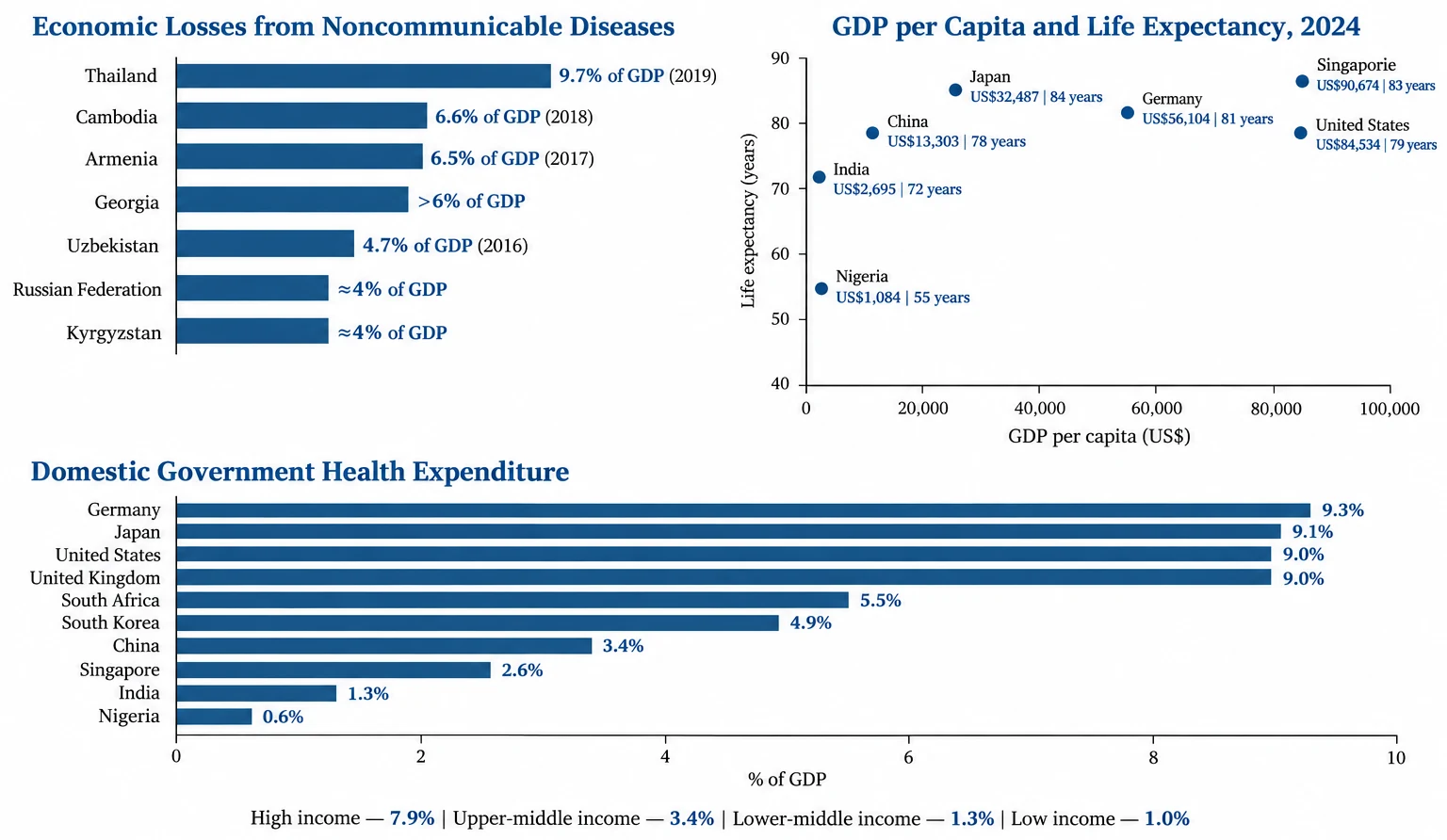
Sources: WHO and United Nations Development Programme investment case estimates on noncommunicable diseases; World Bank, World Development Indicators, GDP per capita and life expectancy, 2024; WHO Global Health Expenditure Database, domestic government health expenditure as a percentage of GDP.
Government expenditure on health also differs relative to the size of national economies. WHO's Global Health Expenditure Database reports domestic government health expenditure of about 7.9 per cent of GDP across high-income economies in 2023, compared with 3.4 per cent in upper-middle-income economies, 1.3 per cent in lower-middle-income economies and 1.0 per cent in low-income economies. In 2023, domestic government health expenditure was about 9.3 per cent of GDP in Germany, 9.1 per cent in Japan, about 9.0 per cent each in the United States and United Kingdom, 4.9 per cent in South Korea, 5.5 per cent in South Africa, 3.4 per cent in China, 2.6 per cent in Singapore, 1.3 per cent in India and 0.6 per cent in Nigeria.
Global Health Outcomes
The right to the highest attainable standard of health has been expressed through the Sustainable Development Goals (SDGs), universal health coverage (UHC) targets and disease-specific interventions. World Bank World Development Indicators reports global life expectancy at about 73 years for 2024. In 2024, life expectancy was about 80 years in high-income economies, compared with 76 years among upper-middle-income economies, 70 years for lower-middle-income economies and 65 years within low-income economies. The gap between high-income and low-income economies was about 15 years.
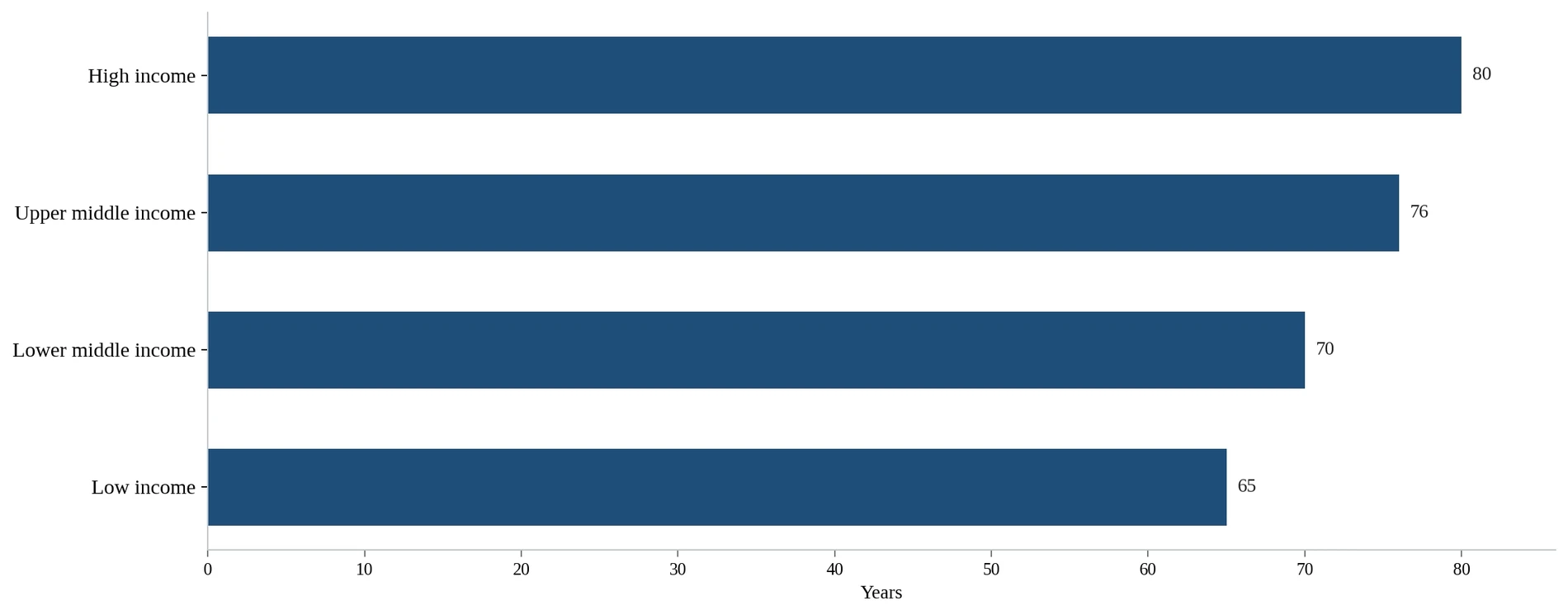
Source: World Bank, World Development Indicators, Life expectancy at birth, total (years), 2024.
COVID-19 demonstrated how accumulated gains could be interrupted by an epidemic event. The World Health Organization estimated in World Health Statistics 2026 that the pandemic was associated with 22.1 million excess deaths between 2020 and 2023, including indirect deaths, and described recovery as incomplete and regionally uneven.
The United Nations Maternal Mortality Estimation Inter-Agency Group estimates that the global maternal mortality ratio fell from 328 deaths per 100,000 live births in 2000 to 197 by 2023, while annual maternal deaths declined from about 443,000 to 260,000. Sub-Saharan Africa accounted for nearly 70 per cent of maternal deaths during 2023. The United Nations Inter-agency Group for Child Mortality Estimation estimates the global under-five mortality rate at 37.4 deaths per 1,000 live births for 2024, compared with 76.7 in 2000; neonatal mortality declined from 30.3 to 17.2 over the same period. A total of 4.9 million children died before age five during 2024, including 2.3 million newborns.
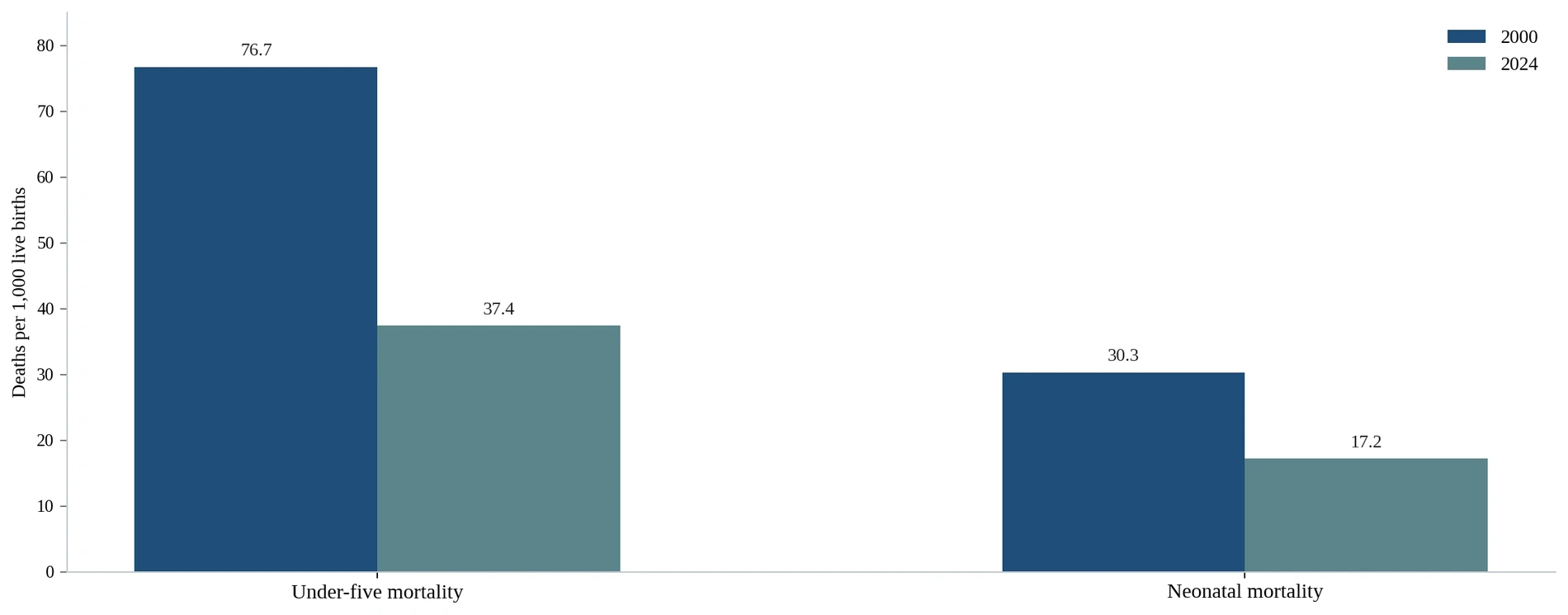
Source: United Nations Inter-agency Group for Child Mortality Estimation, Levels & Trends in Child Mortality 2025, March 2026.
Health Financing and Protection
Universal health coverage requires access to needed health services without financial hardship. The UHC service coverage index rose from about 45 in 2000 to 68 in 2021. The previous catastrophic health spending indicator showed the share of the population spending more than 10 per cent of household budgets on out-of-pocket health payments rising from 9.6 per cent in 2000 to 13.5 per cent by 2019. WHO and the World Bank have since revised the financial hardship framework to capture the effect of health spending on resources available for other necessities.
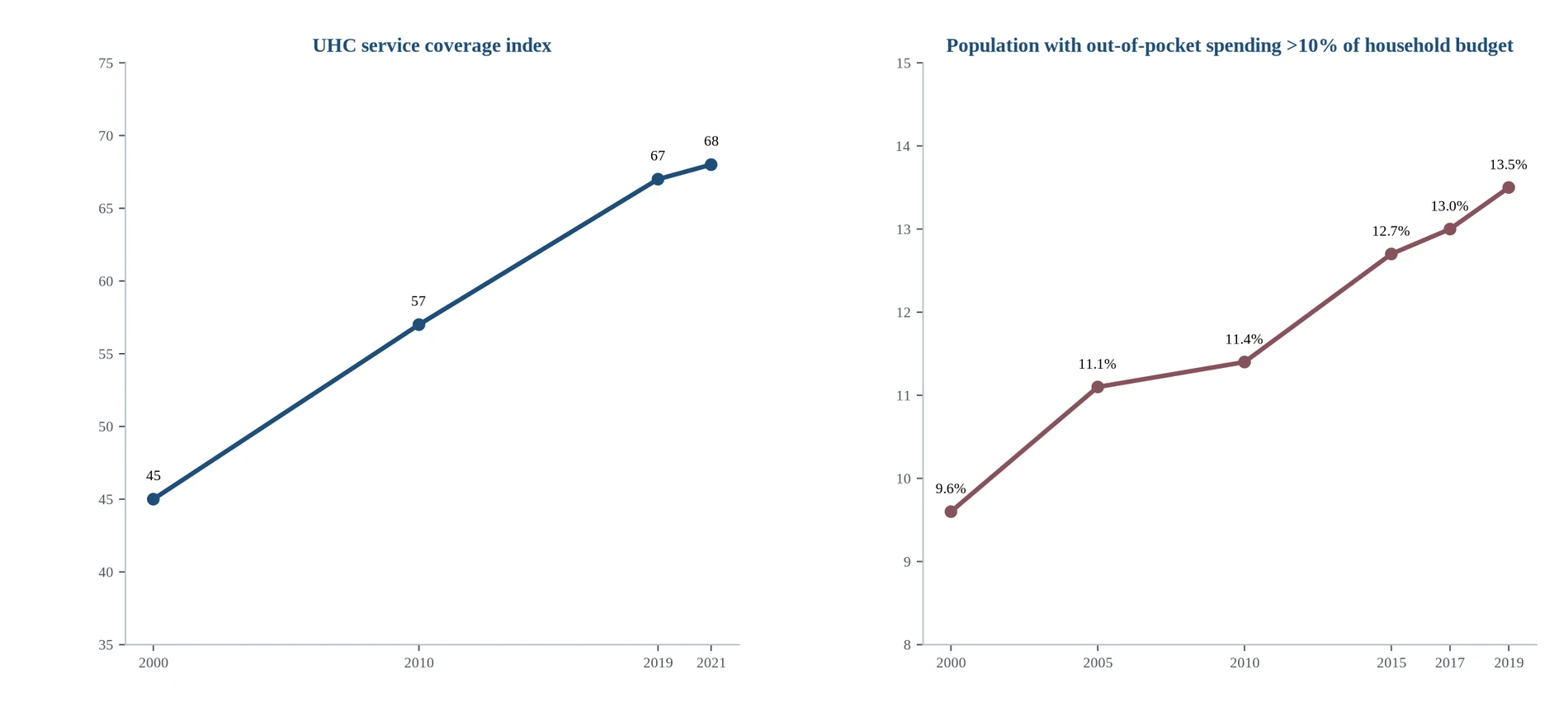
Source: WHO and World Bank, Tracking Universal Health Coverage: 2023 Global Monitoring Report. The two indicators have different reference years and should not be subtracted from one another.
Government health expenditure comprises public resources spent through government schemes. Out-of-pocket expenditure consists of payments made directly by households. The World Health Organization reported in 2024 that domestic public health spending remained above pre-pandemic levels for most income groups. Data published by WHO for 2022 show domestic public health expenditure accounting for about 6 per cent of government spending among low-income economies. The corresponding shares were 5 per cent for lower-middle-income economies and 8 per cent for upper-middle-income group. External debt service absorbed a comparable or larger share within those groups, reaching about 8 per cent among lower-middle-income economies.
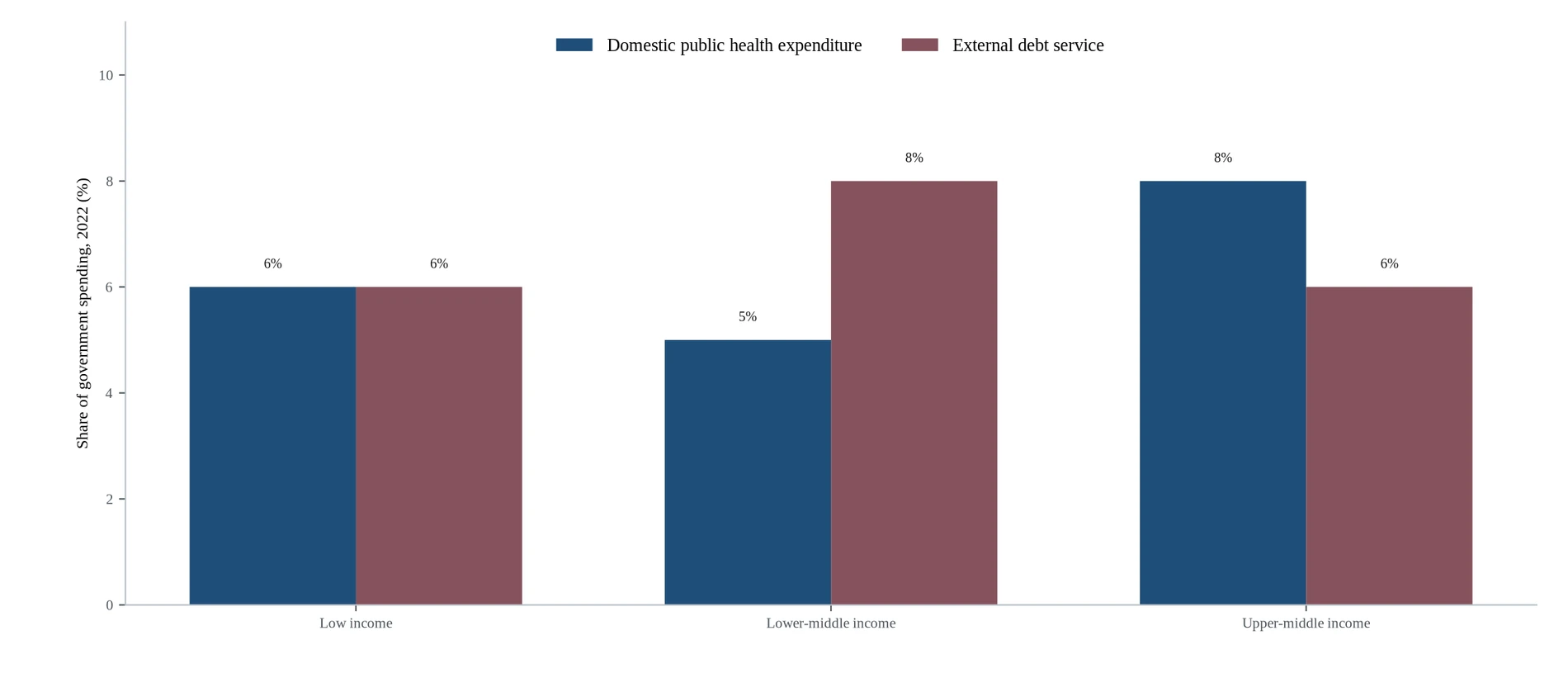
Source: WHO, Global Spending on Health, 2024
Essential Infrastructure in Healthcare Facilities
In 2025, 85 per cent of healthcare facilities globally had a basic water service, compared with 76 per cent in 2015. Seventy-two per cent had basic hygiene services, up from 55 per cent ten years earlier. Seventy-one per cent had basic health care waste management services, compared with 59 per cent. Forty per cent met the requirements for a basic sanitation service. Water service estimates were available for 84 countries. Fifty-seven per cent of facilities in sub-Saharan Africa had a basic water service, compared with 89 per cent across Central and Southern Asia. The corresponding proportions were 89 per cent for hospitals and 79 per cent among non-hospital facilities. Urban facilities reached 92 per cent and rural facilities 75 per cent.
In 2025, 907 million people were served by healthcare facilities without a basic water service. Another 936 million relied on facilities that did not meet the requirements for a basic sanitation service. Functional hand hygiene facilities at points of care were unavailable to 652 million people, and 571 million were served by facilities lacking basic health care waste management services. In least developed countries, 19 per cent of facilities met the requirements for a basic sanitation service while 27 per cent had basic health care waste management services.
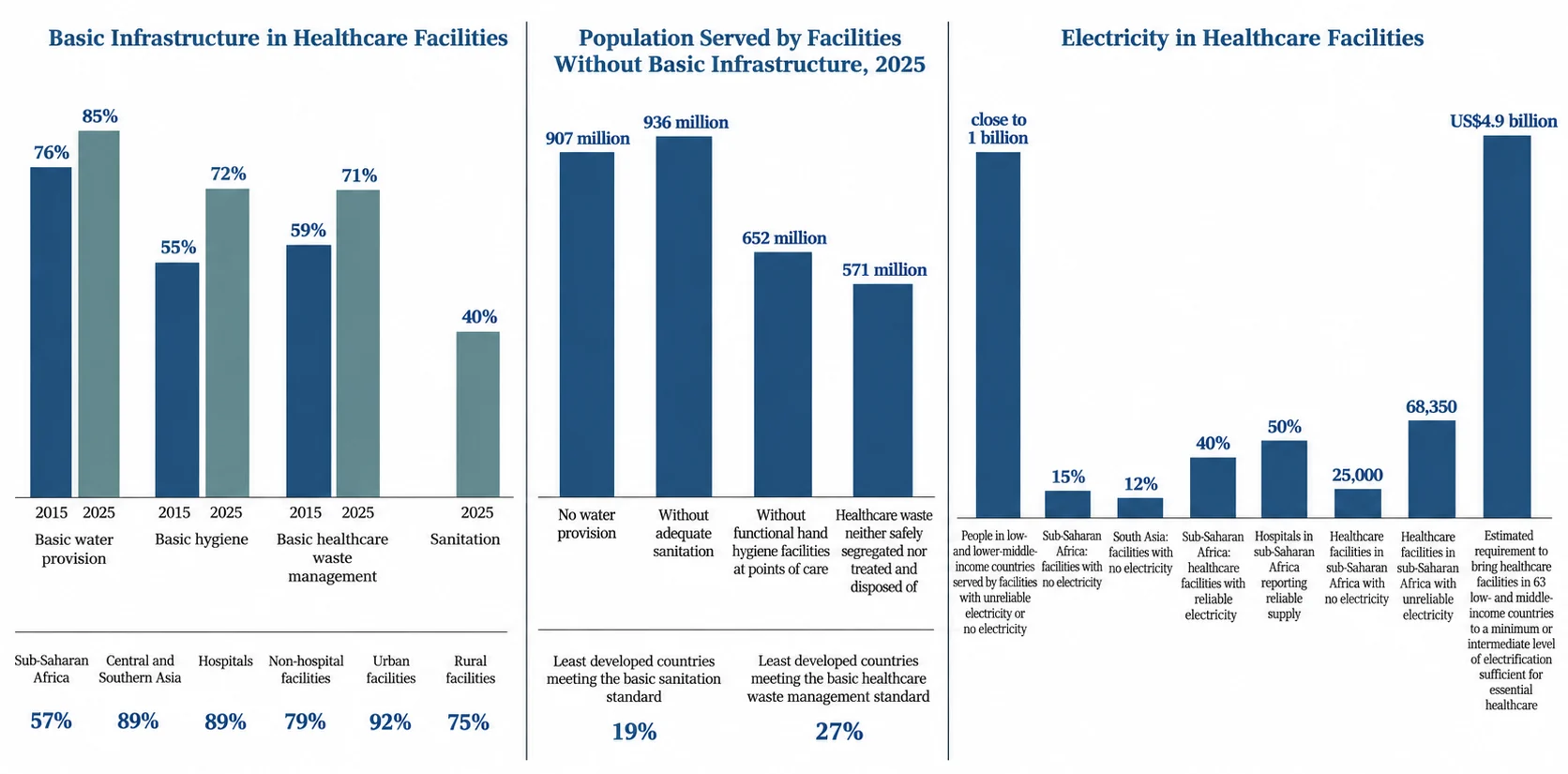
Sources: WHO and UNICEF, WASH in Health Care Facilities, 2025; WHO, Electricity in Health Care Facilities; World Bank estimate on electrification of healthcare facilities in 63 low- and middle-income countries.
The 2023 joint assessment by WHO, the World Bank, the International Renewable Energy Agency (IRENA) and Sustainable Energy for All (SEforALL) drew on national surveys conducted between 2015 and 2022, using 2022 population estimates. The assessment estimated that close to 1 billion people living in low- and lower-middle-income countries were served by healthcare facilities lacking reliable electricity or any electricity supply. The assessment found no electricity at 15 per cent of facilities in sub-Saharan Africa while South Asia’s estimate was 12 per cent.
Medical Travel Times and Trends
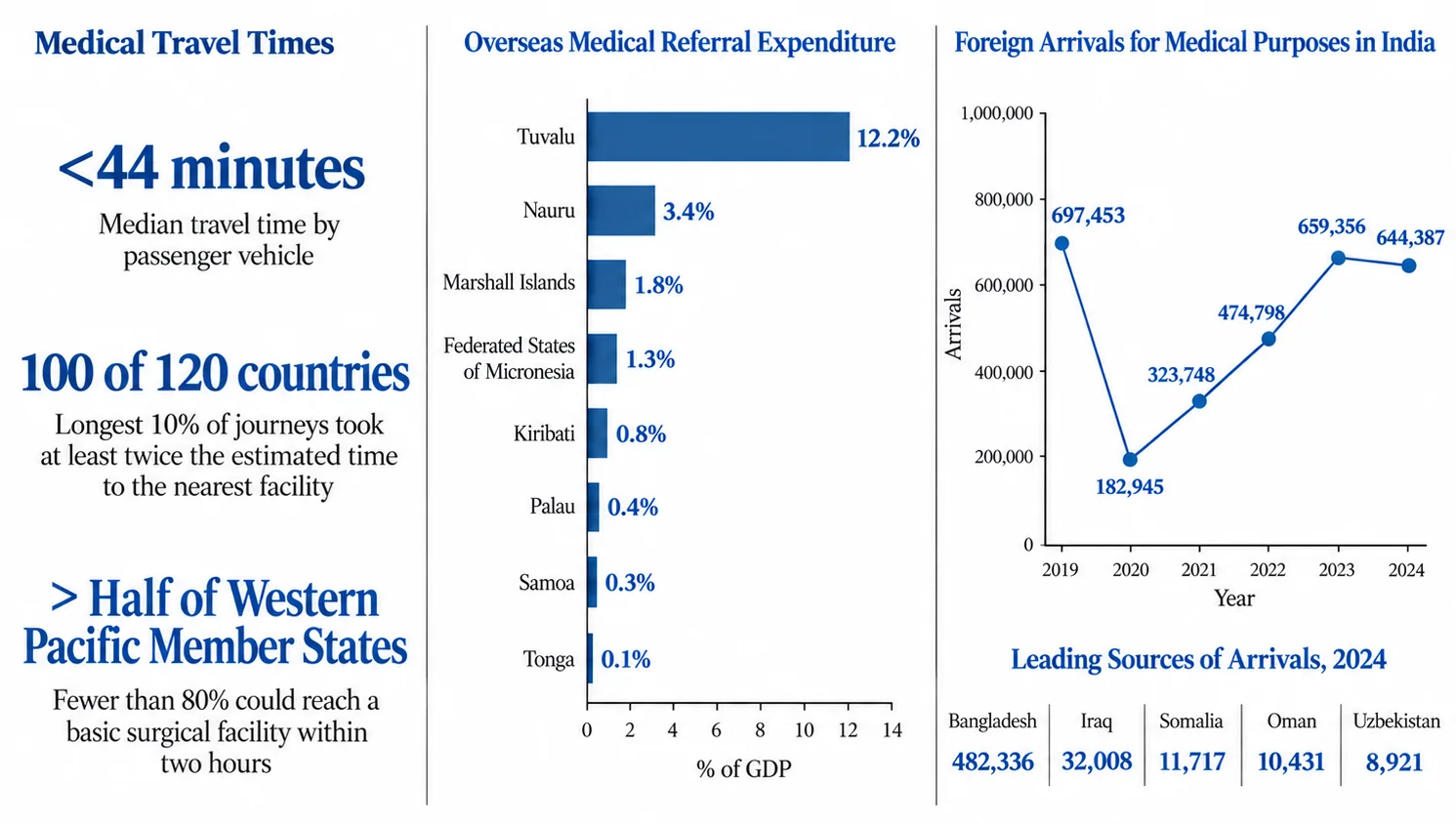
Travel time to access healthcare varies within and between countries. Research published in Communications Medicine in 2023 by Gligorić and colleagues, drawing on travel-time data from 120 countries, found a median passenger-vehicle journey to a healthcare facility of less than 44 minutes for the countries examined, but national averages concealed much longer journeys for some population. In 100 of the 120 countries, the longest 10 per cent of actual journeys were at least twice as long as estimated travel to the nearest healthcare facility. Distance, road networks, the distribution of facilities and the location of specialist services therefore determine whether treatment available nationally is accessible locally.
Sources: Gligorić et al., patient travel time to healthcare, 2023; WHO Western Pacific data on access to basic surgical services; World Bank, overseas medical referral in Pacific Island countries; Government of India, foreign arrivals for medical purposes.
In more than half of WHO Member States in the Western Pacific Region with available data, less than 80 per cent of the population could reach a facility providing caesarean delivery, laparotomy and treatment of open fracture within two hours. These procedures are used by WHO as indicators of access to basic surgical services. Government-funded overseas medical referral affects public expenditure. A World Bank comparison of nine Pacific Island countries found the highest overseas medical referral expenditure in Tuvalu, equivalent to 12.2 per cent of GDP. Nauru followed at 3.4 per cent, while the Marshall Islands and Federated States of Micronesia accounted for 1.8 and 1.3 per cent respectively. Kiribati, Palau, Samoa and Tonga accounted for 0.8, 0.4, 0.3 and 0.1 per cent respectively. The costs varied according to treatment, destination, length of stay and transport requirements. India reported 644,387 foreign arrivals for medical purposes in 2024. The corresponding totals were 697,453 (2019), 182,945 (2020), 323,748 (2021), 474,798 (2022) and 659,356 (2023). Bangladesh accounted for 482,336 of the 2024 arrivals. The next largest sources were Iraq (32,008 arrivals), Somalia (11,717), Oman (10,431), and Uzbekistan (8,921). The burden can fall on households, insurers or governments.
Access to Medicines, Vaccines and Health Technologies
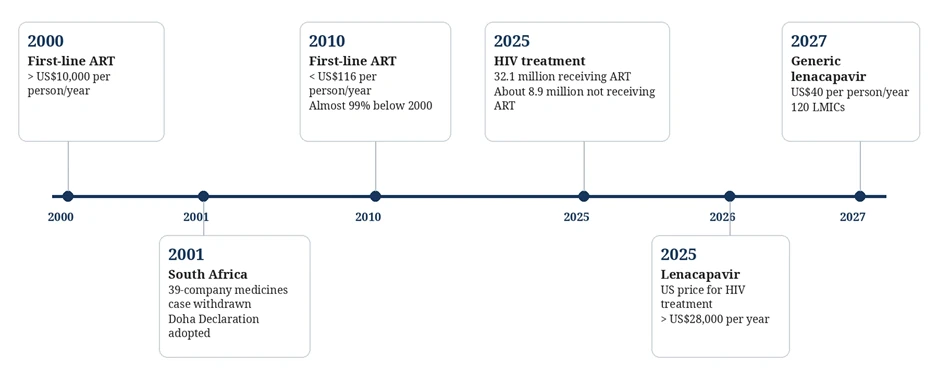
Low-income countries faced annual first-line antiretroviral therapy (ART) costs exceeding US$10,000 per person in 2000. By 2010, the least expensive WHO-recommended first-line regimen cost less than US$116, a reduction of almost 99 per cent.
South Africa’s Pharmaceutical Manufacturers’ Association and 39 companies challenged Medicines Act amendments intended to make lower-cost medicines more accessible. The applicants withdrew the case in 2001. Members of the World Trade Organization (WTO) adopted the Doha Declaration in November 2001, affirming that members may protect public health, promote access to medicines and use flexibilities available under the Agreement on Trade-Related Aspects of Intellectual Property Rights (TRIPS). By 2025, 32.1 million of the 41.0 million people living with HIV were receiving antiretroviral therapy according to estimates from the Joint United Nations Programme on HIV/AIDS (UNAIDS).
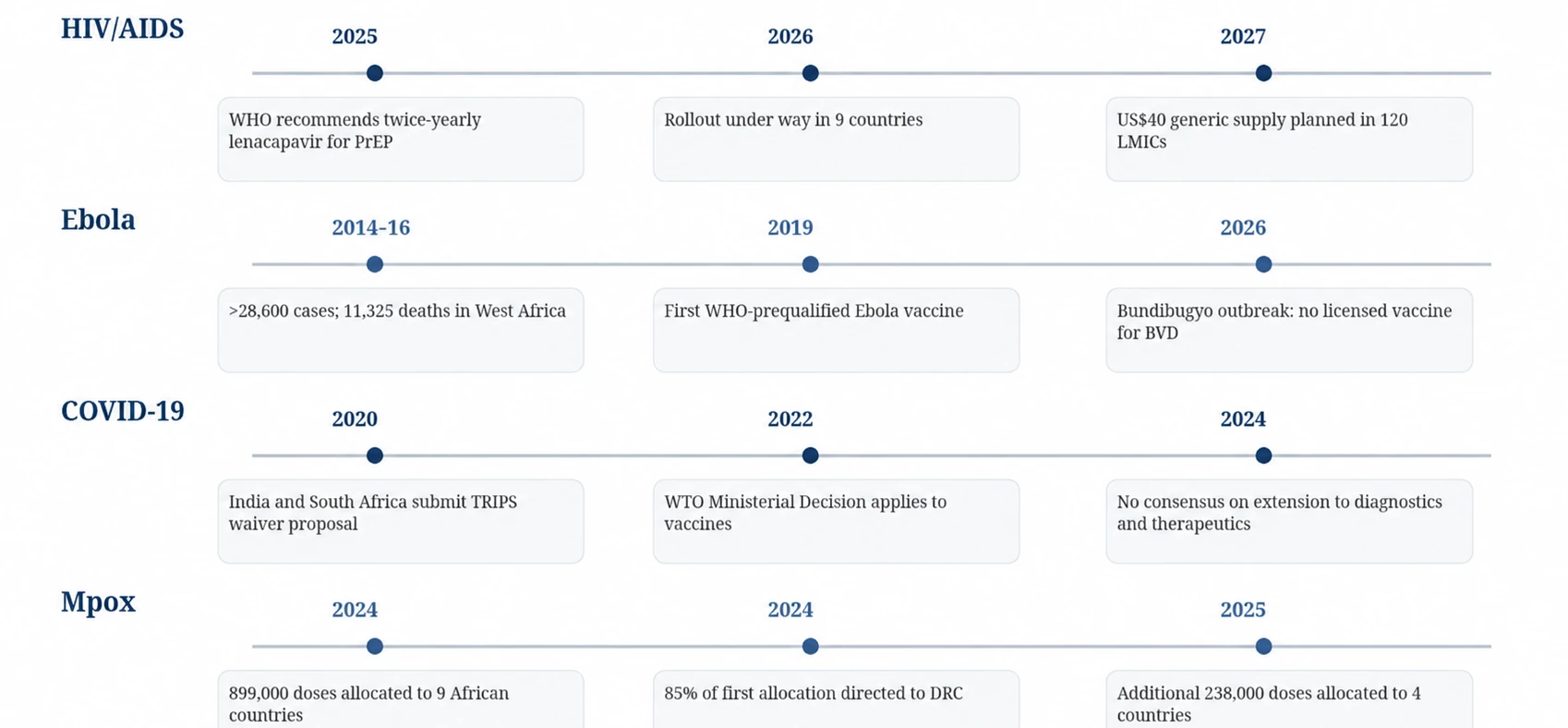
In July 2025, WHO recommended twice-yearly injectable lenacapavir for HIV pre-exposure prophylaxis after trials reported high efficacy. By April 2026, introduction was under way in nine countries through programmes supported by the United States and the Global Fund. The programmes aim to reach 3 million people before the end of 2028. Gilead developed the medicine and licensed six generic manufacturers to supply 120 low- and lower-middle-income countries. Its annual price for HIV treatment in the United States exceeded US$28,000 in late 2024. In September 2025, Unitaid, the Clinton Health Access Initiative and Wits RHI announced an agreement with Dr Reddy’s Laboratories to supply generic lenacapavir at about US$40 per person annually from 2027. The Gates Foundation announced a separate agreement with Hetero at the same annual price.
Sources: UNAIDS; WHO; WTO, Declaration on the TRIPS Agreement and Public Health (2001); Unitaid; The Global Fund. The 2027 lenacapavir figure refers to the announced generic prevention price.
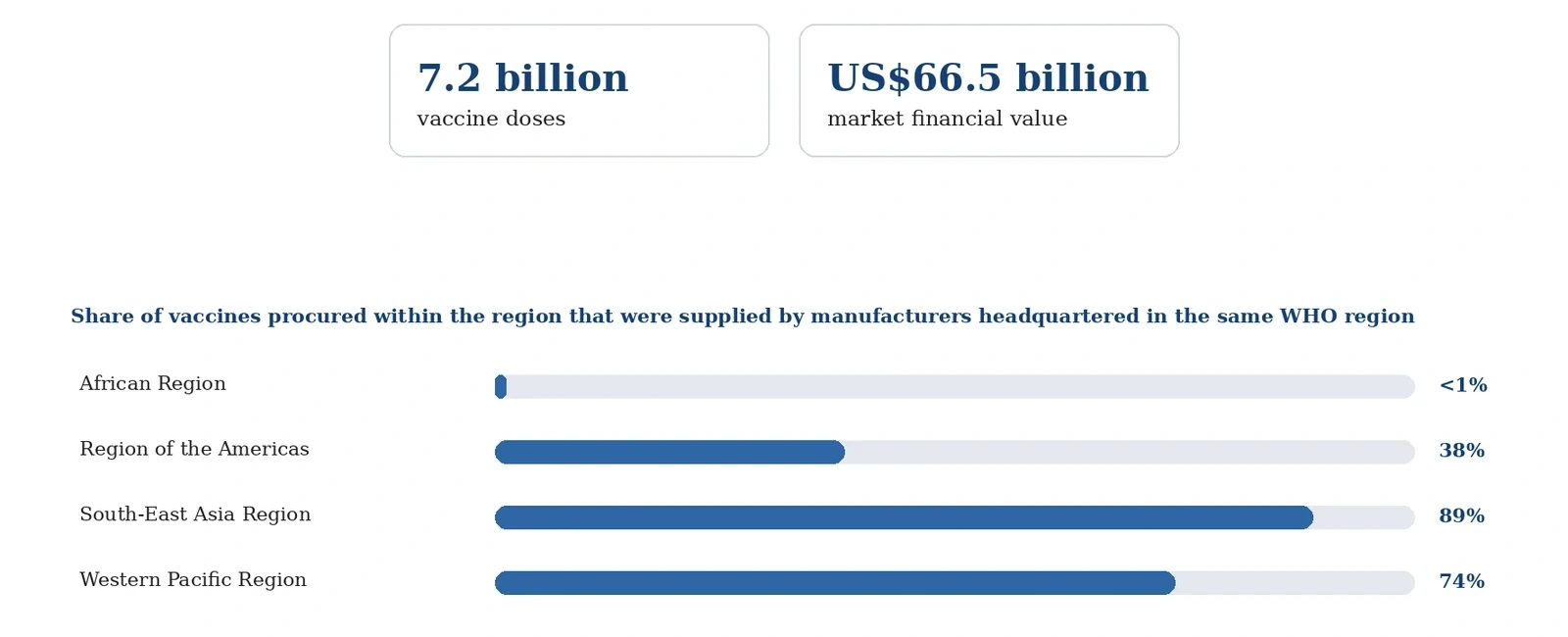
By May 2022, 80 per cent of people in high-income countries had received at least one COVID-19 vaccine dose, compared with 16 per cent in low-income countries. COVAX delivered nearly 2 billion doses to 146 countries and supplied 74 per cent of the COVID-19 vaccine doses received by low-income countries. Two-dose coverage among its lower-income participating countries reached 57 per cent, compared with a global average of 67 per cent. India and South Africa had asked the WTO in October 2020 to waive TRIPS obligations covering products required for the prevention, containment and treatment of COVID-19. The Ministerial Decision adopted in June 2022 applied to COVID-19 vaccines. WTO members subsequently failed to reach consensus on an extension of the decision to diagnostics and therapeutics. WHO reported a global vaccine market of 7.2 billion doses worth about US$66.5 billion in 2024. The ten largest manufacturers supplied more than 78 per cent of global requirements. Their share of market value exceeded 84 per cent. Pfizer/BioNTech and Moderna supplied 95 per cent of global mRNA vaccine volume in 2024. Companies headquartered in the African Region produced less than 1 per cent of the vaccines purchased by its countries, with more than half supplied by companies headquartered in India. Manufacturers in the South East Asia Region supplied about 89 per cent of vaccines procured within the region, while the equivalent share in the Western Pacific Region was about 74 per cent. The Region of the Americas sourced about 38 per cent of procured vaccine from manufacturers headquartered within the region.
Source: World Health Organization, Global Vaccine Market Report 2025.
More than 28,600 people were infected and 11,325 died during the 2014-2016 West African Ebola epidemic. A vaccine trial led by WHO in Guinea during 2015 found no Ebola cases ten days or more after vaccination among 5,837 recipients. The comparison group had 23 cases among people who were not vaccinated immediately. WHO prequalified Ervebo, manufactured by Merck, in November 2019 as the first Ebola vaccine to meet its standards for quality, safety and efficacy. As of 7 September 2026, the Democratic Republic of the Congo had reported 6,757 confirmed cases of Bundibugyo virus disease and 3,267 deaths. Uganda had reported 20 confirmed cases and France one. WHO reported on 9 September 2026 that no licensed vaccine existed for Bundibugyo virus disease.
In November 2024, the international Access and Allocation Mechanism assigned 899,000 mpox vaccine doses to nine African countries, with 85 per cent directed to the Democratic Republic of the Congo, where more than 38,000 suspected cases and more than 1,000 deaths had been reported that year. The mechanism expected more than 5.85 million doses to become available by the end of 2024. A second allocation in March 2025 assigned another 238,000 doses to Angola, Guinea, Sierra Leone and Uganda.
Sources: WHO, UNAIDS, WTO, Unitaid and The Global Fund. Ebola figures include WHO outbreak data to 7 September 2026. Mpox allocations refer to the Access and Allocation Mechanism rounds of November 2024 and March 2025.
WHO reported in June 2026 that 70 per cent of countries had inadequate or weak regulatory systems for medicines and vaccines, with greater deficiencies affecting diagnostics and medical devices. More than 1,700 health products had been listed through WHO prequalification by the end of 2025. WHO estimates that as many as 2 billion people lack access to essential medicines, vaccines, diagnostics and other health products. WHO also estimates that more than 10 per cent of medicines in low- and middle-income countries are substandard.
Commercial Determinants of Health
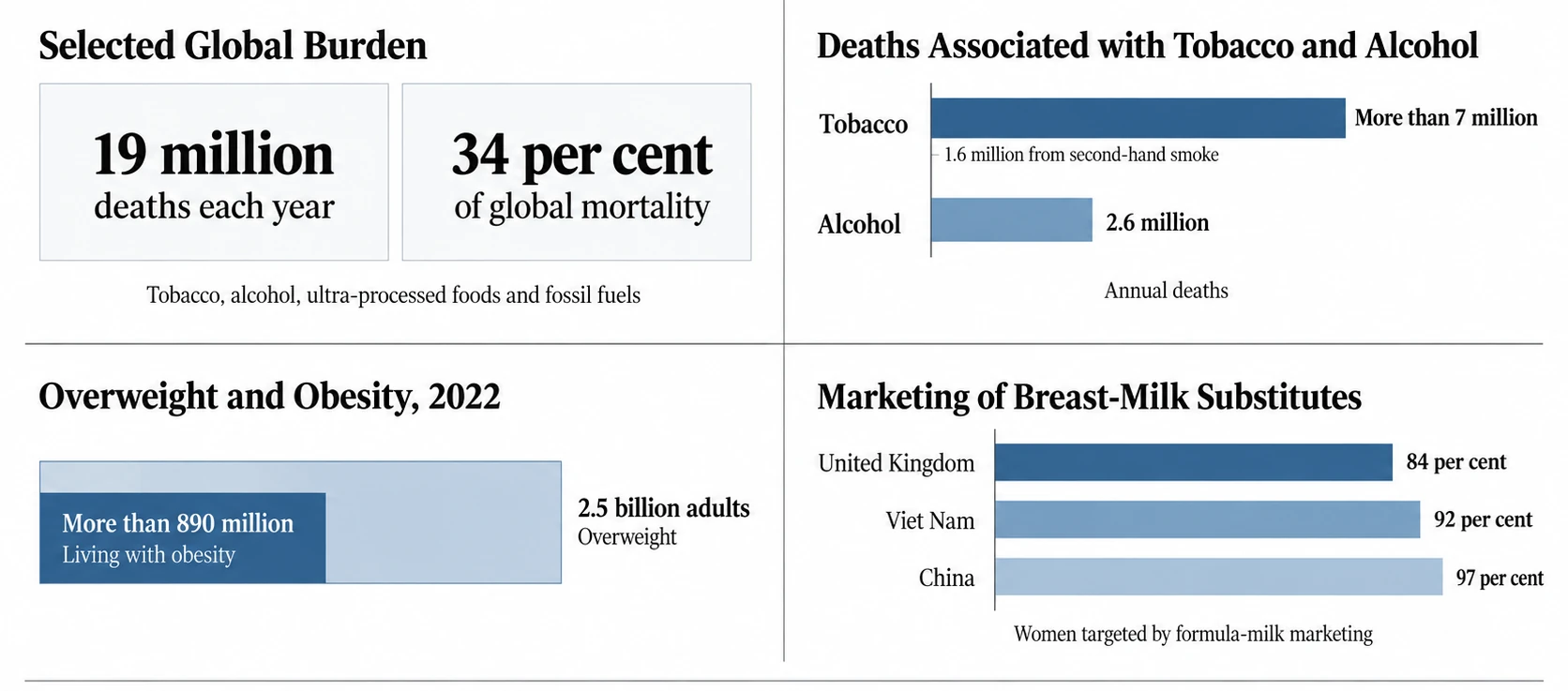
Products associated with tobacco, alcohol, ultra-processed foods and fossil fuels account for an estimated 19 million deaths each year, equivalent to 34 per cent of global mortality. In the WHO European Region, these industries are wholly or partly responsible for about 2.7 million deaths annually, or nearly one quarter of deaths in the region. The burden includes cardiovascular disease, cancer, chronic respiratory disease, diabetes and other noncommunicable diseases, while commercial activity influences consumption through pricing, product formulation, distribution, advertising, sponsorship and lobbying.
Tobacco kills more than 7 million people each year, including more than 1.6 million non-smokers affected by second-hand smoke. Nearly 1.2 billion people use tobacco, and approximately 80 per cent live in low- and middle-income countries. The World Health Organization (WHO) Framework Convention on Tobacco Control has 182 Parties covering more than 90 per cent of the world's population, while 5.6 billion people are covered by at least one MPOWER tobacco-control measure. Alcohol accounted for 2.6 million deaths in 2019, including 1.6 million attributed to noncommunicable diseases, 700,000 associated with injuries and 300,000 resulting from communicable diseases. About 400 million people were living with alcohol use disorders, including 209 million with alcohol dependence, while 13 per cent of alcohol-attributable deaths occurred among people aged 20 to 39 years. In 2026, at least 167 countries were levying taxes on alcoholic beverages and 12 prohibited alcohol, though WHO found that alcohol had become more affordable in most countries since 2022. Median excise taxes represented about 14 per cent of beer prices and 22.5 per cent for spirits, while wine remained untaxed in at least 25 countries.
Sources: World Health Organization, Commercial Determinants of Health; World Health Organization, Tobacco; World Health Organization, Alcohol; World Health Organization, Obesity and Overweight; World Health Organization and UNICEF, Marketing of Breast-Milk Substitutes.
Commercial food production is associated with the changing burden of diet-related disease. In 2022, 2.5 billion adults were overweight, including more than 890 million living with obesity. Adult obesity more than doubled between 1990 and 2022, while adolescent obesity quadrupled. Average adult sodium intake reached 4,278 mg per day in 2021, more than twice the WHO recommendation. Sodium consumption was associated with an estimated 1.7 million deaths during 2023. As of July 2024, at least 116 countries applied excise taxes to one or more types of sugar-sweetened beverage. WHO reported in its 2025 global assessment that the median tax represented only about 2 per cent of the price of a common sugary soft drink. Marketing of breast-milk substitutes has influenced maternal and child health. A study by WHO and the United Nations Children’s Fund (UNICEF), involving more than 8,500 pregnant women and mothers in eight countries found that more than half had been targeted by formula-milk marketing. The proportion reached 84 per cent in the United Kingdom, 92 per cent for Viet Nam and 97 per cent among respondents from China. The International Code of Marketing of Breast-milk Substitutes was adopted by the World Health Assembly in 1981. As of March 2024, only 33 of 194 countries had measures aligned with the Code. In May 2025, the World Health Assembly adopted a further resolution addressing digital marketing, including influencer marketing and personalised promotion. The influence of market participants is still prominent in policy and regulatory frameworks. The Framework Convention on Tobacco Control requires Parties to protect tobacco-control policy from the commercial and vested interests of the tobacco industry. WHO and UNICEF have documented attempts by manufacturers and distributors of breast-milk substitutes to weaken or delay national legislation. The global response has expanded through tobacco controls, product taxes, restrictions on marketing and the International Code. In 2025, WHO launched the 3 by 35 Initiative, seeking a 50 per cent increase in the prices of tobacco, alcohol and sugary drinks through taxation by 2035. WHO estimates that such taxation could mobilise about US$1 trillion in additional public revenue over a decade. Modelling cited by WHO indicates that a one-time 50 per cent price increase could prevent 50 million premature deaths over fifty years.
Health Emergency Preparedness and Response
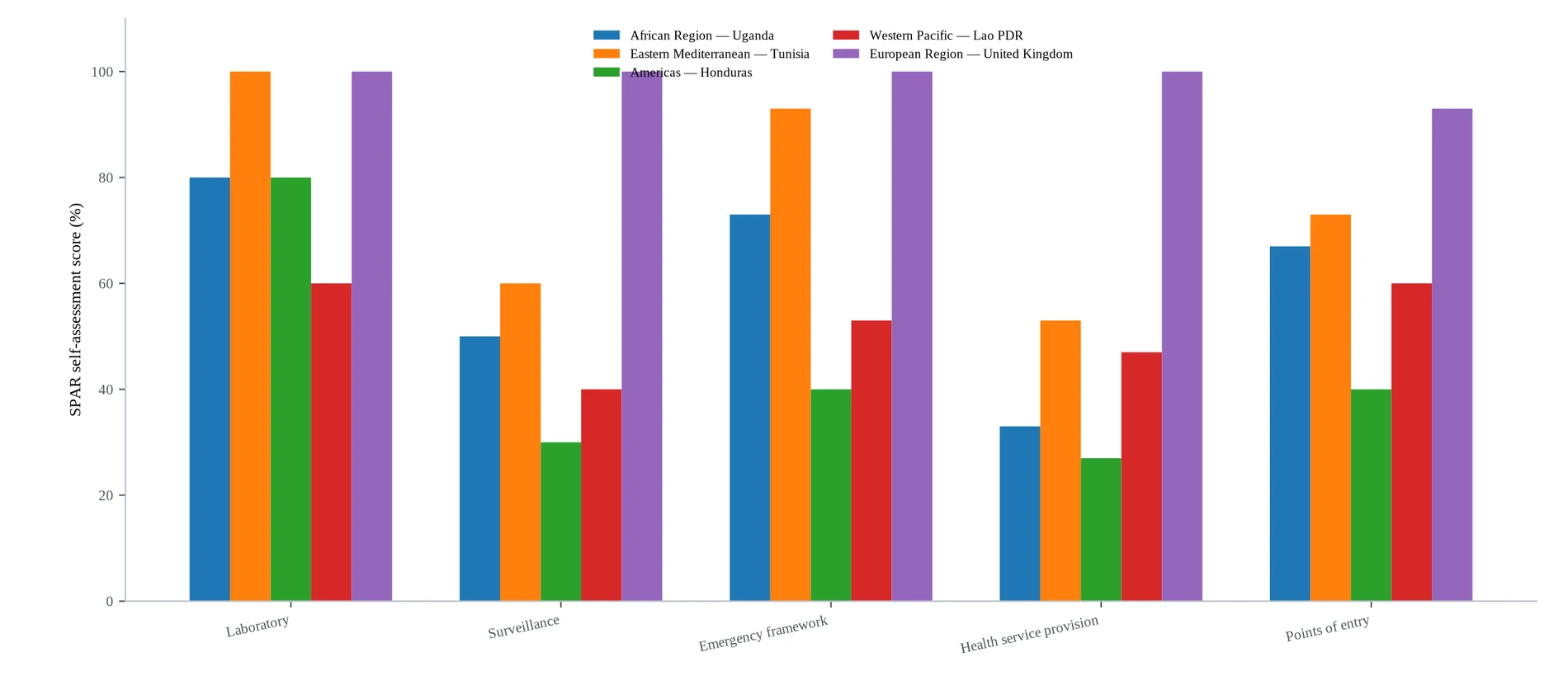
The International Health Regulations (IHR) require States Parties to develop capacities for detecting, assessing, notifying and responding to public health risks. For the 2024 reporting cycle, the World Health Organization (WHO) reported a global State Party Self-Assessment Annual Reporting (SPAR) capacity score of 64, with submissions from 99 per cent of States Parties. SPAR is a self-assessment mechanism. Its scores show what governments report against IHR indicators and do not constitute an independent verification of performance under crisis conditions. The United Kingdom reported an overall score of 95 in its 2024 submission, while Uganda, Tunisia, Honduras and Lao People's Democratic Republic reported different combinations of strength and weakness across the same indicators.
Source: WHO IHR State Party Self-Assessment Annual Reporting (SPAR), 2024 submissions. Country submissions are shown with their WHO region; they are self-assessments, not independently verified regional averages.
The Pandemic Fund supports pandemic prevention, preparedness and response in eligible countries. The first funding round received requests totalling about US$2.56 billion and approved US$338 million for 19 projects covering 37 countries. More than US$2 billion in additional resources was expected to accompany the approved grants. The second round received requests totalling about US$4.59 billion and approved US$547 million for 28 projects covering 50 countries. Reported co-investment and mobilisation exceeded the value of the grants. About US$499.6 million was approved for 20 projects during the third round, with more than US$4 billion expected in additional resources.
| Funding round | Funding requested | Approved grants | Additional finance / co-investment | Coverage | Implementation position |
|---|---|---|---|---|---|
| Round 1 | US$2.56bn | US$338m | US$2.16bn expected additional resources | 19 projects; 37 countries | Awards approved in 2023; implementation portfolio active |
| Round 2 | US$4.59bn | US$547m | About US$4.0bn indicated by reported leverage | 28 projects; 50 countries | Awards approved in 2024; implementation portfolio active |
| Round 3 | Not stated in the cited round summary | US$499.6m | More than US$4bn expected additional resources | 20 projects; multi-country portfolio | Awards approved; implementation under way |
Source: Pandemic Fund inaugural progress reporting and governing-board funding decisions.
Healthcare in Armed Conflict and Humanitarian Emergencies
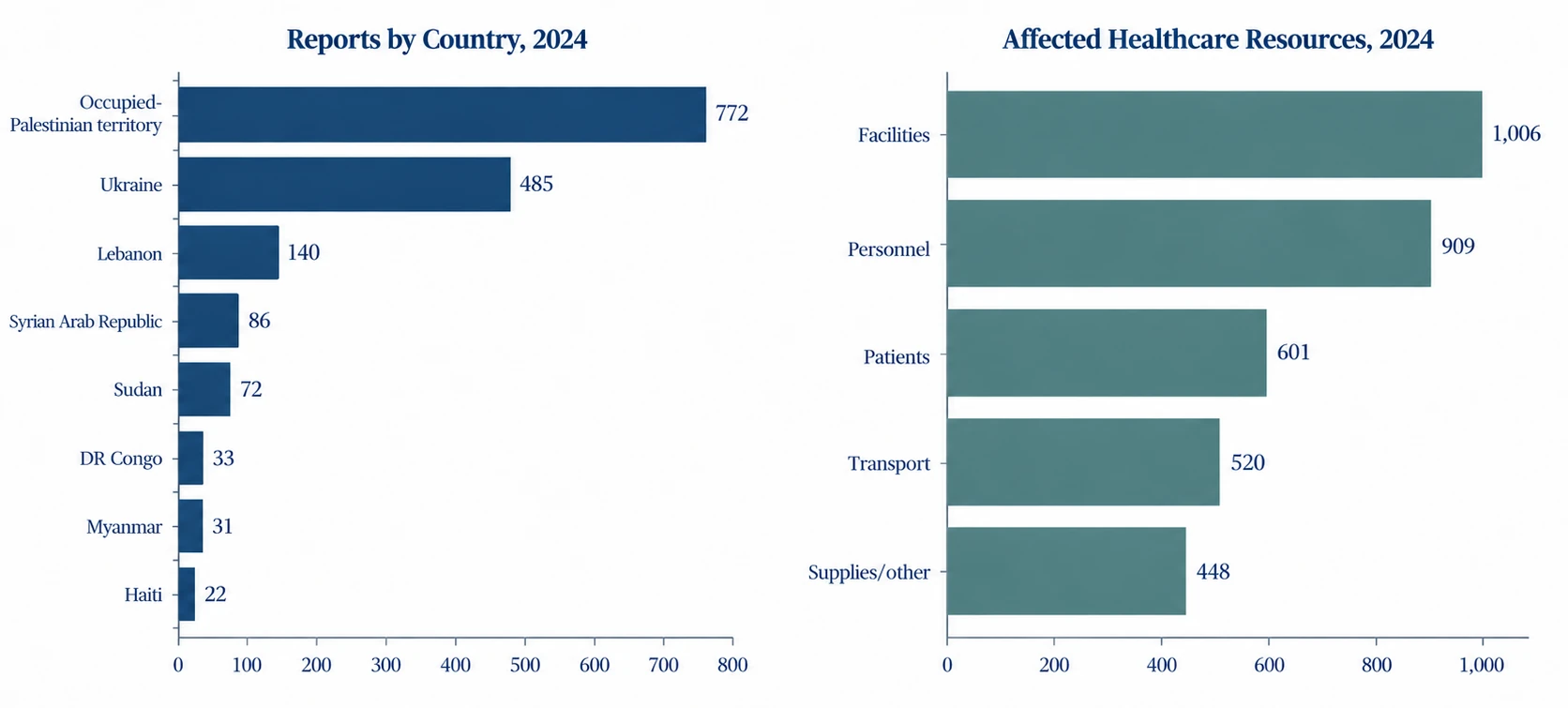
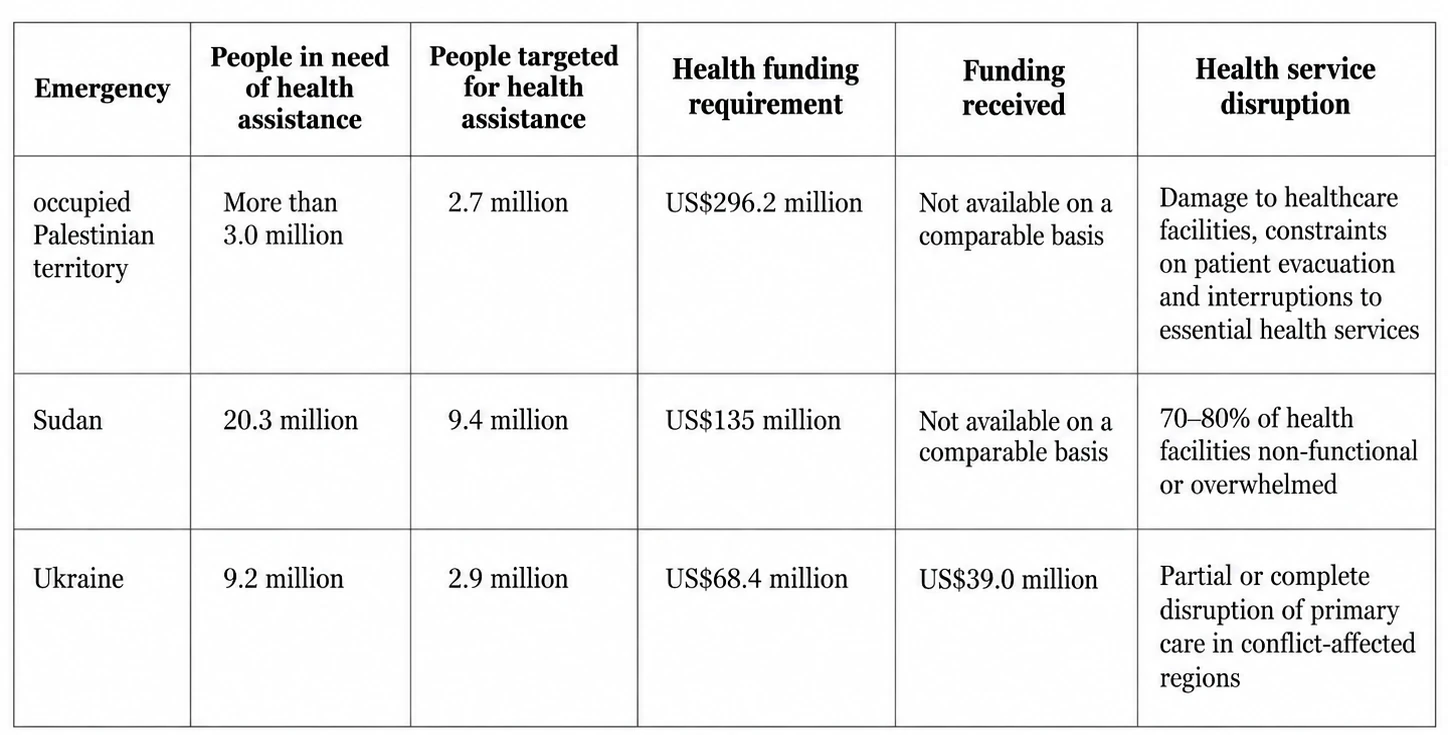
International humanitarian law protects health personnel, facilities, transport and patients. The World Health Organization (WHO) reported 1,696 attacks on health care during 2024 through its Surveillance System for Attacks on Health Care (SSA). The attacks affected 16 countries and territories and were associated with 945 deaths and 1,779 injuries. The occupied Palestinian territory accounted for 772 attacks and Ukraine 488. Other totals were Lebanon (149), the Syrian Arab Republic (84), Sudan (72), the Democratic Republic of the Congo (33), Myanmar (31) and Haiti (22).
Source: WHO Surveillance System for Attacks on Healthcare, 2024.
Sources: World Health Organization Health Emergency Appeal 2025; World Health Organization country reporting; Health Cluster reporting; United Nations Office for the Coordination of Humanitarian Affairs financial records.
Sanctions, Trade Measures and Access to Health
Governments deployed trade controls when the COVID-19 pandemic created sudden shortages of masks, protective equipment, vaccines and other medical items. The World Trade Organization (WTO) reported both export restrictions and import facilitation measures as countries attempted to secure supply. The European Union (EU) introduced an export authorisation measure for personal protective equipment in March 2020 and replaced it as supply conditions changed. It introduced export authorisation for COVID-19 vaccines and active substances in 2021 and moved to surveillance from 2022. These measures differed in product coverage, duration and form.
Sources: United Nations Security Council; United Nations Office of the Iraq Programme; World Health Organization.
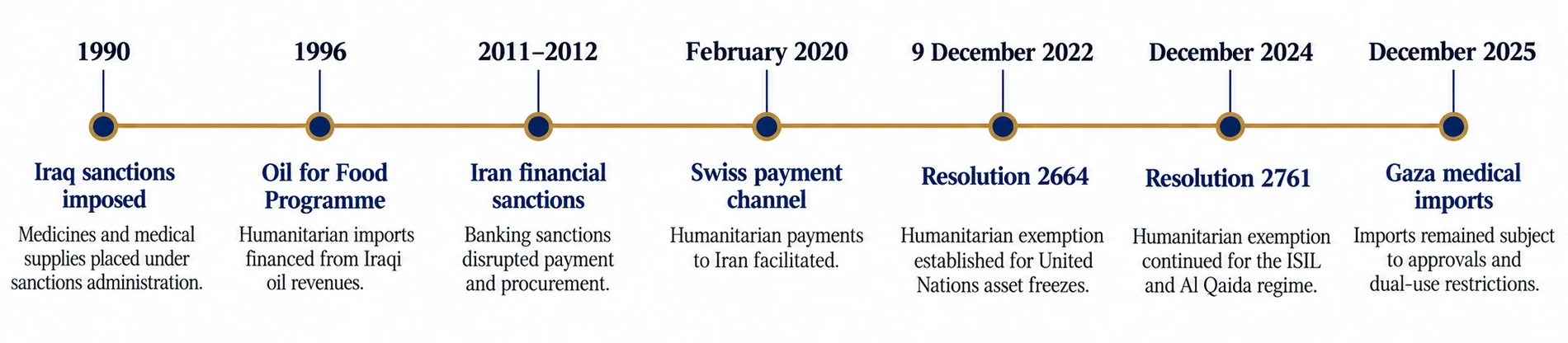
United Nations sanctions imposed on Iraq after 1990 subjected imports of medicines, medical equipment and other civilian goods to sanctions controls. The Oil-for-Food Programme subsequently permitted Iraq to finance humanitarian imports from oil revenues under United Nations supervision. By 31 December 2002, the United Nations Office of the Iraq Programme had received 4,030 health-sector contracts valued at US$3.37 billion. Contracts worth approximately US$3.03 billion had been approved, while health supplies valued at about US$2.11 billion had arrived in the country.
Financial sanctions affecting Iran disrupted access to medicines despite exemptions for humanitarian products. A study published by WHO examined 26 medicines used for diabetes, asthma, cancer and multiple sclerosis between 2008 and 2013, covering the period when sanctions were imposed on Iranian banks in 2011 and the Central Bank in 2012. Availability fell significantly for 13 of the 26 medicines examined. WHO subsequently reported that restrictions on financial transactions and reluctance among suppliers to transact with Iranian entities had disrupted the purchase and delivery of medical equipment, laboratory supplies and life-saving medicines, including goods intended for humanitarian purposes.
The United States maintained exemptions and authorisations covering exports of food, medicines and medical devices to Iran, but restrictions affecting financial transactions continued to constrain payment and the purchase of humanitarian goods. A Swiss humanitarian payment channel became operational in February 2020, facilitating payments for humanitarian exports to Iran. Before the conflict that began in October 2023, WHO had reported that Israel's dual-use list restricted the importation of medical equipment, medicines and other health supplies into Gaza. Delays affected the delivery of supplies by the Ministry of Health, WHO and other health organisations. In December 2025, WHO reported that imports of essential medical supplies and equipment into Gaza remained subject to approval procedures and restrictions, with many items classified as potentially dual-use.
By 22 May 2026, the United Nations Security Council committee responsible for sanctions on the Democratic People’s Republic of Korea (DPRK) had approved 124 requests allowing humanitarian activities that would otherwise have been restricted by the sanctions regime. Approved exemptions permitted WHO to procure and import laboratory equipment for vaccine-preventable diseases, emergency medical supplies and diagnostic equipment. On 9 December 2022, United Nations Security Council resolution 2664 established a humanitarian exemption from asset freezes imposed under United Nations sanctions for organisations providing humanitarian assistance or supporting basic human needs. The exemption permits the provision, processing and payment of funds, other financial assets, economic resources, goods and services necessary for humanitarian activities without violating the applicable asset freeze. Resolution 2761, adopted in December 2024, confirmed the continuing application of the exemption to the ISIL and Al-Qaida sanctions regime.
Climate Change and Health
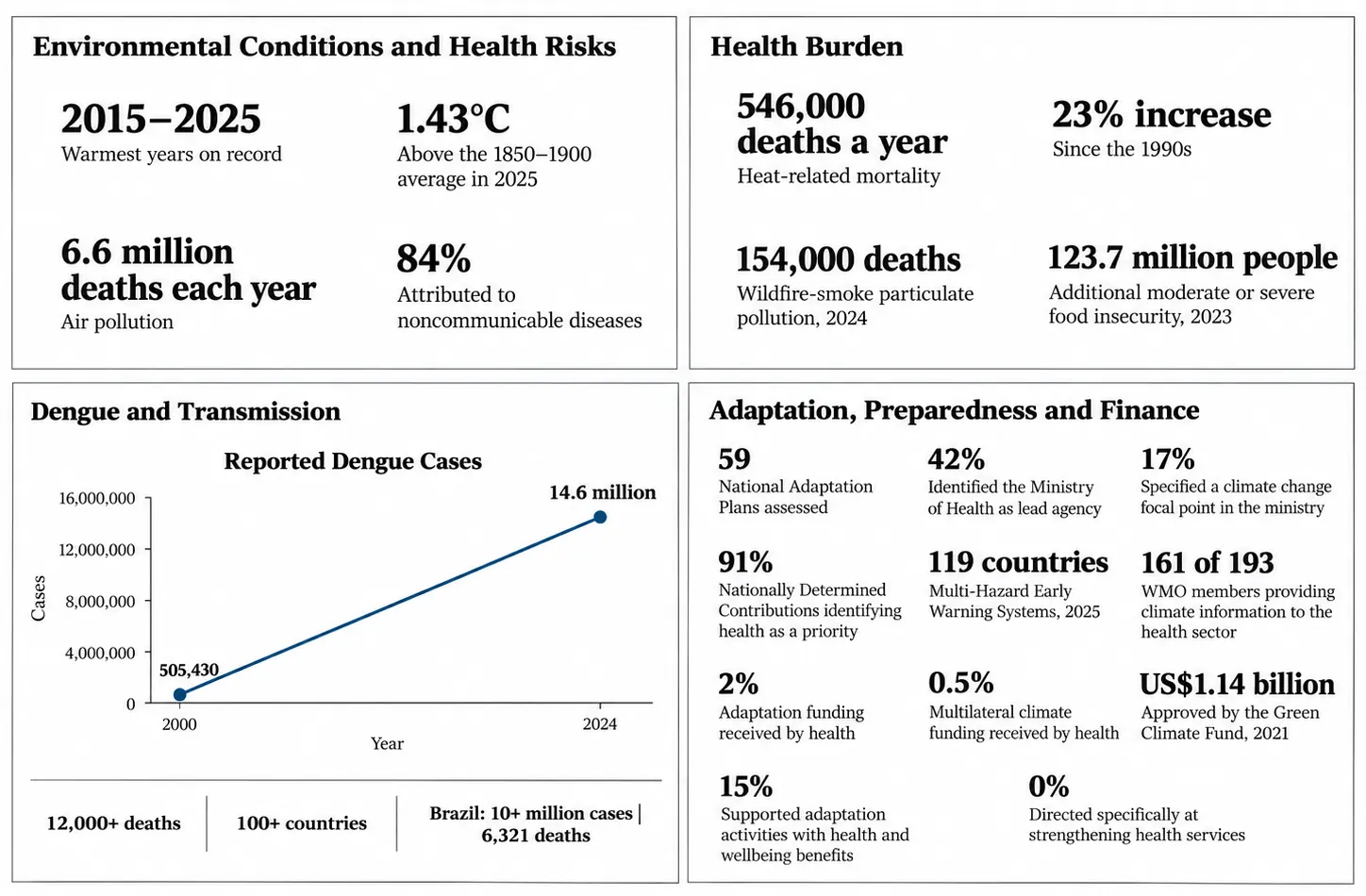
Rising temperatures have changed the health conditions faced by populations and health systems. The years 2015 to 2025 were the warmest on record, and the global mean near-surface temperature in 2025 was about 1.43°C above the 1850–1900 average. WHO estimated in 2026 that air pollution causes about 6.6 million deaths each year, with almost 84 per cent attributable to noncommunicable diseases. In 2024, 2.1 billion people lacked access to safe drinking water and 3.4 billion lacked adequate sanitation. Rising temperatures, drought, flooding, wildfire and changing rainfall patterns have compounded risks to cardiovascular and respiratory health, nutrition, safe water and infectious disease control.
Heat-related mortality has risen by 23 per cent since the 1990s to an estimated 546,000 deaths a year. Wildfire-smoke particulate pollution was associated with an estimated 154,000 deaths in 2024, the highest annual estimate in the Lancet Countdown series. Compared with the 1981–2010 baseline, the higher frequency of heatwave days and drought months in 2023 was associated with an additional 123.7 million people experiencing moderate or severe food insecurity.
Dengue cases reported to WHO increased from 505,430 in 2000 to 14.6 million in 2024. More than 12,000 dengue-related deaths were reported in over 100 countries in the year, with Brazil accounting for more than 10 million cases and 6,321 deaths. WHO identifies increasing temperatures, rainfall and humidity, changes in mosquito distribution, urbanisation, population displacement and weaknesses in surveillance among the factors contributing to transmission.
Sources: WMO, State of the Global Climate; WHO; Lancet Countdown; WHO dengue reporting; WHO assessment of National Adaptation Plans; WMO early warning and climate information data; Green Climate Fund.
In 2025, WHO assessed 59 National Adaptation Plans. All identified health as vulnerable to climate change, yet only 42 per cent designated the Ministry of Health as the lead agency for developing the health component and 17 per cent specified a climate change focal point within the ministry. By 2026, health was identified as a priority in 91 per cent of Nationally Determined Contributions (NDCs) under the Paris Agreement. Multi-Hazard Early Warning Systems were reported by 119 countries in 2025, more than double the number in 2015, although coverage remained lower among Small Island Developing States. In 2024, 161 of 193 World Meteorological Organization (WMO) members reported providing climate information to the health sector. Financing has remained small relative to the scale of action identified in national plans. WHO estimates that health receives about 2 per cent of adaptation funding and 0.5 per cent of multilateral climate funding. Of US$1.14 billion approved by the Green Climate Fund in 2021, 15 per cent supported adaptation activities with health and wellbeing benefits, but none was directed specifically at strengthening health services.
Migration, Displacement and Health
The United Nations High Commissioner for Refugees (UNHCR) reported about 41.6 million refugees at the end of 2025, with about 68 per cent hosted by low- and middle-income countries. Access to health services for those populations depends first on legal status and the route through which a host country finances care. Some states integrate refugees into public health care and national health plans while others use humanitarian services or status-dependent entitlements. Uganda has pursued inclusion through public services and refugee-response planning supported by UNHCR and partners. Jordan has used a mix of public services, refugee-specific support and fee or coverage rules. Entitlement to healthcare in Germany depends on asylum and residence status. Colombia has used regularisation and enrolment in the national health insurance to bring displaced Venezuelans into health coverage.

Sources: UNHCR Global Trends 2025; United Nations population estimates.
The Gains and Gaps in Digital Health
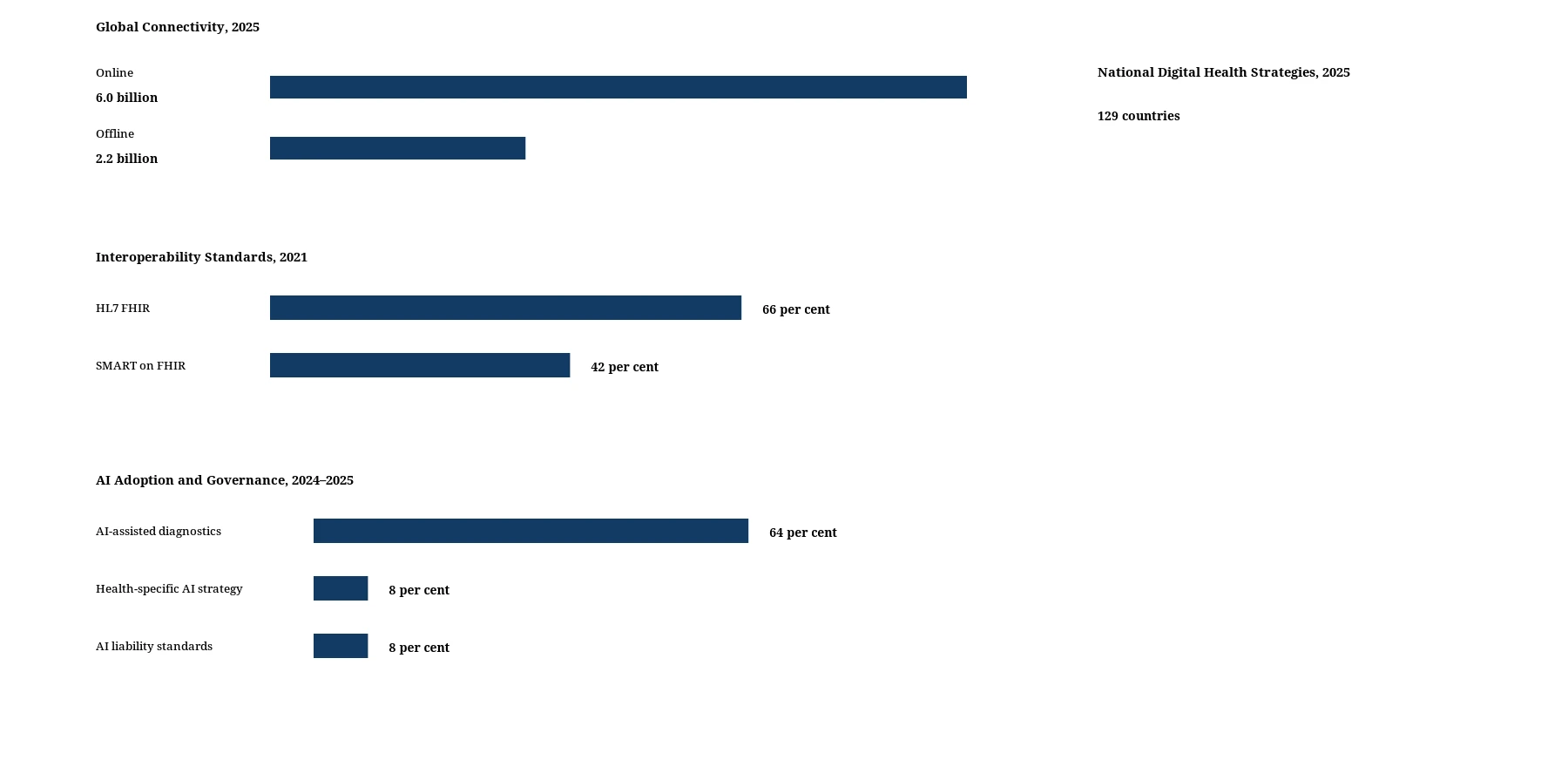
By 2025, 129 countries had established national digital health strategies, while about 130 Member States had completed digital health maturity assessments. The World Health Organization (WHO) Global Digital Health Certification Network had reached 1.8 billion people in 80 countries, creating a means for participating states to verify health documents digitally. The World Health Assembly extended the Global Strategy on Digital Health from 2025 to 2027 and directed WHO to prepare its successor for 2028–2033. The reach of national policy has therefore expanded since the strategy was endorsed in 2020. The communication infrastructure on which much of digital health depends has not expanded at the same pace globally. The International Telecommunication Union (ITU) estimated that 6.0 billion people were online in 2025 while 2.2 billion remained offline, predominantly in low- and middle-income countries.
The survey by WHO in 2022 on Digital Health in the European Region found that 44 of its 53 Member States had a national digital health strategy and all had legislation protecting the privacy of personal data, but only 19 had developed guidance for evaluating digital health interventions. Just over half had policies addressing digital health literacy and a digital inclusion plan, while 15 per cent reported evaluation of government-sponsored mobile health programmes. Reporting published in 2023 by the Organisation for Economic Co-operation and Development (OECD), based on developments as of 2021, found that almost 90 per cent of responding countries were introducing legislation requiring interoperability standards. Sixty-six per cent were adopting the Health Level Seven International Fast Healthcare Interoperability Resources (HL7 FHIR) standard and 42 per cent were adopting Substitutable Medical Applications and Reusable Technologies on Fast Healthcare Interoperability Resources (SMART on FHIR). The European Health Data Space Regulation entered into force on 26 March 2025 and established rules governing access to, use of and exchange of electronic health data.
Comparable policy development has proceeded in other regions. By 2024, at least 80 per cent of Member States in the World Health Organization South-East Asia Region had drafted or completed national digital health strategies, with interoperability and health information systems included among the areas covered by those plans. In the Americas, health ministers adopted the Pan American Health Organization (PAHO) Plan of Action for Strengthening Information Systems for Health 2024–2030 in October 2024, including measures on data management, standards, legislation and digital health. WHO Member States in the Western Pacific Region endorsed a Regional Action Framework on Digital Health in 2024 covering governance, digital infrastructure, health data and monitoring. By the end of 2025, comprehensive health information system assessments had been completed in 19 Western Pacific countries representing 99 per cent of the region's population. During 2024–2025, WHO supported 12 countries in the African Region with electronic health and telemedicine initiatives and introduced regional guidance on health data and interoperability. The consultation by WHO in April 2026 on the Global Strategy on Digital Health 2028–2033 identified limited interoperability among the continuing problems requiring attention. In July 2026, WHO and the International Telecommunication Union invited countries and technical organisations to review draft guidance for digital public infrastructure for health intended to support national systems capable of exchanging health information through common technical standards.
AI has been deployed in health settings faster than health-specific rules have developed in many countries. The WHO Regional Office for Europe received responses from 50 of its 53 Member States during the 2024–2025 assessment. Thirty-two countries, or 64 per cent, reported AI-assisted diagnostics, particularly in medical imaging, and about half reported patient chatbots. Only four had a national AI strategy specific to health, fewer than one quarter provided AI training for health workers and four had liability standards defining responsibility when an AI application causes harm. In July 2026, ministers and senior officials from 37 countries representing all six WHO Regions met in Lisbon, where the findings formed part of the discussion on governance and clinical deployment.
Sources: International Telecommunication Union; World Health Organization; Organisation for Economic Co-operation and Development.
Regulatory approaches have developed differently between jurisdictions. The United States Food and Drug Administration (FDA) maintains a list of AI-enabled medical devices that have satisfied applicable premarket requirements. Health Canada has issued guidance for machine-learning-enabled medical devices covering design, clinical validation, transparency, population representativeness and post-market monitoring. Singapore’s Ministry of Health and Health Sciences Authority updated the AI in Healthcare Guidelines in March 2026, assigning responsibilities to developers, healthcare organisations and health professionals. Australia’s Therapeutic Goods Administration requires AI-based medical devices to meet safety and performance requirements applicable to medical devices. Brazil’s National Health Surveillance Agency regulates qualifying AI and machine-learning software under its rules for software as a medical device (SaMD). The African Union (AU) endorsed the Continental Artificial Intelligence Strategy in July 2024, including healthcare among the sectors affected by AI. In 2025, the Africa Centres for Disease Control and Prevention began developing a continental health data governance framework intended to support common approaches to the management, protection and use of health data in an environment increasingly influenced by AI.
Cybersecurity incidents and information system failures have interrupted clinical services in health systems on several continents. The European Commission reported 309 cybersecurity incidents affecting healthcare in the European Union during 2023, more than in any other critical sector. On 3 June 2024, a ransomware attack on Synnovis disrupted pathology services for hospitals and primary care providers in south-east London. National Health Service (NHS) England subsequently reported that 10,152 acute outpatient appointments and 1,710 elective procedures were postponed at King’s College Hospital NHS Foundation Trust and Guy’s and St Thomas’ NHS Foundation Trust. In the United States, the cyberattack on Change Healthcare in February 2024 disrupted healthcare and billing information systems nationwide. The United States Department of Health and Human Services described the incident as a threat to patient care and essential health sector operations. In South Africa, a cyberattack on the National Health Laboratory Service (NHLS) in June 2024 disrupted laboratory operations serving the public health system. The NHLS provides services for more than 85 per cent of the country’s population. Full operations were restored in August 2024. In Singapore, information technology failures during August and September 2022 affected electronic medical records, appointment systems, pharmacy services and laboratory applications. Following the cyberattack on the Costa Rican Social Security Fund in May 2022, parts of the national digital health system remained unavailable from June until August, and some services reverted to paper-based medical records. A cyberattack on Waikato District Health Board in May 2021 in New Zealand interrupted cancer services, including radiotherapy, which was unavailable locally for two to three weeks.
Global Health Governance
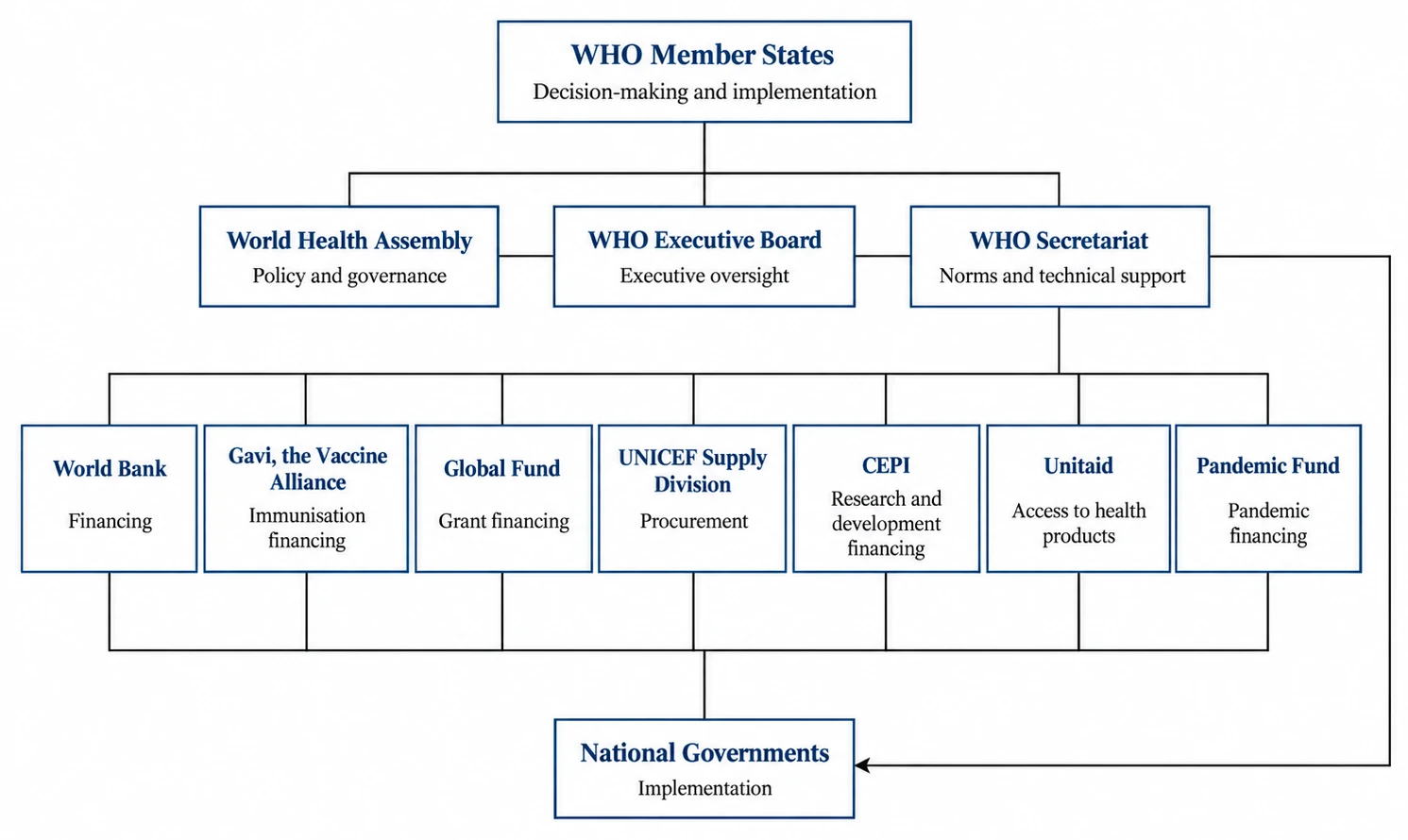
The World Health Assembly is the supreme decision-making body of the World Health Organization (WHO) and is attended by delegations from all WHO Member States. The 34-member Executive Board gives effect to Assembly decisions and policies, while the Assembly determines policies of WHO, appoints the Director-General and approves the programme budget. Article 19 of the WHO Constitution permits the Health Assembly to adopt conventions or agreements by a two-thirds vote, with each agreement entering into force for a Member after acceptance through its constitutional processes. Article 21 gives the Assembly authority to adopt regulations covering matters including sanitary and quarantine requirements and procedures intended to prevent the international spread of disease. Global health governance therefore operates through legal instruments of different force rather than through a single source of international authority.
Sources: World Health Organization; World Bank; Gavi, the Vaccine Alliance; Global Fund to Fight AIDS, Tuberculosis and Malaria; United Nations Children’s Fund; Coalition for Epidemic Preparedness Innovations; Unitaid; Pandemic Fund.
The International Health Regulations (IHR) provide an example of a binding international health law. The IHR apply to 196 States Parties, including all 194 WHO Member States, and govern rights and obligations concerning public health risks with potential global consequences. Amendments adopted by the World Health Assembly in 2024 entered into force for most States Parties on 19 September 2025. They introduced a new category of pandemic emergency, required governments to establish National IHR Authorities to coordinate implementation, created a States Parties Committee and added provisions concerning access to medical products and financing. Eleven States Parties rejected the 2024 amendments, leaving earlier provisions applicable to them unless those rejections are withdrawn. WHO administers the Regulations as Secretariat, but the Regulations do not give the Organization authority to compel national governments to adopt particular health measures.
The World Health Assembly adopted the WHO Pandemic Agreement by consensus on 20 May 2025 under Article 19 of the WHO Constitution, creating a second treaty negotiated under that provision after the Framework Convention on Tobacco Control. Its provisions cover pandemic prevention, preparedness and response, access to pandemic-related health products, a Coordinating Financial Mechanism and a Global Supply Chain and Logistics Network. Entry into force remains pending because the Pathogen Access and Benefit Sharing Annex has not been completed. The eighth meeting of the Intergovernmental Working Group responsible for the Annex took place from 14 to 18 September 2026, with the outcome of the negotiations due for consideration by the Eightieth World Health Assembly in May 2027 or at an earlier special session. The Agreement will open for signature and ratification after adoption of the Annex and will enter into force following 60 ratifications. Its text preserves national authority over domestic laws and policies and does not empower WHO to impose vaccination mandates, travel restrictions, lockdowns or comparable measures.
International health functions are divided among organisations with different mandates. WHO establishes norms, administers international health instruments, coordinates health emergencies and provides technical support. The World Bank finances government programmes and public projects through loans, credits and grants and combines financing with policy advice and technical assistance. Gavi, the Vaccine Alliance, finances immunisation programmes, requires eligible countries to contribute towards the costs of vaccines and supports vaccine procurement through approved procurement agencies. The Global Fund to Fight AIDS, Tuberculosis and Malaria (Global Fund) allocates grants for HIV, tuberculosis and malaria and finances components of national health and community programmes. The United Nations Children’s Fund (UNICEF) Supply Division procures medicines, vaccines and other health products for governments and partner programmes. The Coalition for Epidemic Preparedness Innovations (CEPI) finances development of vaccines and other biological countermeasures for epidemic and pandemic threats, while Unitaid finances the introduction and uptake of health products in low- and middle-income countries where price, availability or market conditions limit access. The Pandemic Fund finances country and regional investments in pandemic prevention, preparedness and response, with the World Bank serving as trustee and hosting its Secretariat, while WHO chairs its Technical Advisory Panel.
The balance between assessed and voluntary contributions affects the discretion available to the WHO Secretariat. Assessed contributions are compulsory payments from Members and Associate Members, while voluntary contributions vary in the extent to which WHO can determine their use. Assessed contributions have accounted for less than 20 per cent of WHO financing for several years. For the 2024–2025 base programme, WHO reported US$884 million in assessed contributions, equivalent to 19 per cent of financing, while flexible funding from assessed contributions, programme support costs and voluntary contributions represented 42 per cent.
The limits of international authority became visible when the United States notified its intention to withdraw from WHO following an executive order issued on 20 January 2025. The order directed the suspension of future United States funding to WHO, the reassignment of government personnel working with the Organization and the cessation of United States participation in negotiations on the WHO Pandemic Agreement and amendments to the International Health Regulations. The notification circulated by the United Nations Secretary-General stated an effective withdrawal date of 22 January 2026. WHO states that the notification remains under consideration by its governing bodies. Its financial planning has nevertheless incorporated the expected loss of United States assessed contributions, reducing projected assessed contributions for 2026–2027 from US$1.378 billion to about US$1.075 billion.
Global health governance consequently operates through international law, Member State decision-making, multilateral finance, grant allocation, procurement, research funding and national implementation. WHO occupies a distinctive position because Member States have given the Health Assembly treaty-making and regulatory powers under the WHO Constitution, but many functions needed to implement international health commitments sit with national governments, development banks and financing agencies.
Health and Foreign Policy
The Forum on China-Africa Cooperation (FOCAC) agenda in 2024 included health alongside trade, industrial development, infrastructure and security. The Beijing Action Plan for 2025–2027 committed China and African governments to establish a China-Africa Hospital Alliance, develop joint medical centres, expand remote and smart medicine, support pharmaceutical production and strengthen cooperation with Africa CDC and the African Medicines Agency (AMA). In January 2023, the African Union and China's foreign minister inaugurated the new Africa CDC headquarters in Addis Ababa, a Chinese-funded project announced through FOCAC. Health infrastructure, deployment of medical personnel, pharmaceutical production and diplomatic engagement were therefore being pursued through the same state-to-state relationship.
The United States Department of State established the Bureau of Global Health Security and Diplomacy in August 2023, bringing diplomatic engagement and the coordination of overseas health assistance under a dedicated bureau that also assumed responsibility for the U.S. President’s Emergency Plan for AIDS Relief (PEPFAR). Its five-year strategy, issued in October 2024, assigned the bureau responsibility for diplomatic engagement with governments, coordination of foreign assistance and international cooperation on health threats, connecting those functions with United States national security and foreign policy. The FY2026 budget request retained a significant bilateral health component, seeking US$3.797 billion for Global Health Programs administered through the Department of State, including US$2.91 billion for HIV/AIDS and US$887 million for tuberculosis, polio, malaria and other infectious diseases.
Switzerland maintains a policy titled Swiss Health Foreign Policy, which the Federal Council extended through 2028. Its priorities include health protection and humanitarian crises, access to medicines, healthcare provision and digitalisation, and the policy is presented as both a means of advancing health and an instrument of Swiss foreign policy. France adopted a Global Health Strategy for 2023–2027 jointly coordinated by the ministries responsible for foreign affairs, health and research, with priorities covering universal health coverage, disease prevention, health emergencies, climate, research and international engagement. Germany's federal global health strategy runs to 2030 and is implemented by ministries beyond the health portfolio.
The UK's 2023–2025 global health policy was jointly led by the Foreign, Commonwealth and Development Office (FCDO) and the Department of Health and Social Care (DHSC). Its scope included diplomatic engagement, overseas development assistance, health expertise, research, innovation, trade and bilateral partnerships. The European Union's Global Health Strategy, adopted in November 2022, places health within EU external policy and incorporates international partnerships, development assistance and Global Gateway programmes into its health objectives. In its 2025 implementation report, the European Commission described global health as a component of EU foreign policy and set out activity under partnerships, financing and external programmes. India has also emphasised medical capability within its relations with developing countries. The Aarogya Maitri initiative, announced at the Voice of Global South Summit in January 2023, committed India to provide essential medical supplies to developing countries affected by disasters or humanitarian crises. India's foreign ministry also funds the e-VidyaBharati and e-ArogyaBharati programme through which Indian institutions provide tele-education and telemedicine to African countries. By November 2024, agreements had been signed with 22 African countries under the programme.
Other relationships have used different forms of cooperation. Japan has continued health assistance in Africa through grants, technical cooperation, workforce training and health system support and incorporated health as a designated area of its development cooperation policy in 2025. The Republic of Korea and African governments agreed at the 2024 Korea-Africa Summit to expand cooperation in vaccination, maternal and child health, disease surveillance, primary healthcare, public health laboratories and the manufacture of essential medicines and medical supplies. Brazil has maintained South-South cooperation with countries including Mozambique and Guinea-Bissau, covering oncology, blood services, medicines, vaccines, digital health, public health training, HIV and tuberculosis. Cuba has continued the deployment of health personnel under bilateral agreements, with official reporting in 2024 indicating medical cooperation in 27 African and 15 Caribbean states.
Philanthropy and Global Health
Private foundations command grantmaking budgets large enough to determine which diseases, technologies and programmes receive attention. The Gates Foundation reported US$8.47 billion in charitable support in 2025, including US$1.897 billion classified under Global Health and health-related allocations under Global Development and Gender Equality. Wellcome reported £1.916 billion in charitable expenditure in 2024–2025, supported by an investment portfolio valued at £39.9 billion, while the Novo Nordisk Foundation awarded DKK11.8 billion (€1.6 billion) to more than 2,200 projects in 2025. Children Investment Fund Foundation’s (CIFF's) charitable commitments reached US$1.45 billion in 2025. The differences between these foundations are as important as their scale. In 2025, Gates allocated US$749 million for polio. Immunisation received US$474 million, malaria US$321 million, HIV US$258 million, tuberculosis US$215 million and vaccine development US$189 million. The Global Fund received a further US$304 million. Wellcome directs much of its expenditure towards discovery research and the challenges of infectious disease, mental health, and climate and health. The Novo Nordisk Foundation combines biomedical research with commitments to cardiometabolic disease and antimicrobial resistance and agreed in 2025 to provide WHO with grants of up to DKK380 million through 2028. CIFF concentrates resources on maternal, newborn and child health, nutrition, sexual and reproductive health and HIV.
WHO maintains official relations with the Gates Foundation. Wellcome was admitted into official relations with WHO in 2018 and The Rockefeller Foundation in 2022. The Bloomberg Family Foundation, commonly known as Bloomberg Philanthropies, has also held official relations with WHO. Gates has simultaneously become one of WHO's largest contributors. As of September 2025, it ranked first among contributors to the 2024–2025 programme budget. The Gates Foundation holds a designated seat on Gavi's Board alongside governments, WHO, UNICEF, the World Bank, civil society, vaccine manufacturers and other constituencies. Wellcome's relationship with WHO has included research and development, antimicrobial resistance, epidemic preparedness, innovation and health data. Rockefeller's relationship with international health predates the establishment of WHO. The Foundation participated as an observer at the 1946 International Health Conference at which the WHO Constitution was signed and later supported health research, disease control, health statistics and health system development. Bloomberg Philanthropies has supported governments and partner organisations on tobacco control, road safety, health data and noncommunicable diseases. Bloomberg reports that partners supported through its tobacco control programme have contributed to 185 laws protecting five billion people in 94 countries.
Other philanthropic organisations have financed programmes with measurable health outcomes. Rotary, through The Rotary Foundation and its PolioPlus programme, has contributed more than US$2.9 billion to polio eradication. Rotary and its partners have helped immunise more than 3 billion children in 122 countries, while global polio incidence has fallen by 99.9 per cent since 1988. The Carter Center has led the global Guinea worm eradication campaign since 1986, when an estimated 3.5 million human cases occurred annually in 21 countries. The END Fund supported the treatment of 240 million people for neglected tropical diseases in 2025 and reports 2.4 billion treatments delivered between 2012 and 2025, alongside 8.33 million health workers trained. The Leona M. and Harry B. Helmsley Charitable Trust has committed US$1.1 billion to type 1 diabetes through more than 840 grants reaching over 50 countries, financing research, technology and access to care.
Health Workforce
The World Health Organization (WHO) estimated the global stock of health and care workers at more than 70 million in its National Health Workforce Accounts 2026. Combined density of medical doctors, nursing and midwifery personnel, dentists and pharmacists increased by 52 per cent, from 44.8 per 10,000 population in 2006 to 67.9 in 2025. Medical doctor density in the WHO European Region was 13 times the level in the African Region, and nursing and midwifery density was six times higher. WHO projects a global shortage of 11.1 million health workers by 2030 and estimates that 67 countries will have insufficient personnel to maintain population health needs. Age data submitted by 122 countries show that nearly one quarter of medical doctors are older than 55 and expected to retire during the next decade. The proportion approaches one third among high-income countries.
Nursing remains the largest health occupation. The global nursing workforce increased from 27.9 million in 2018 to 29.8 million in 2023, while the estimated shortage declined from 6.2 million in 2020 to 5.8 million in 2023. Approximately 78 per cent of nurses were located in countries with 49 per cent of the world's population. One in seven nurses worldwide was foreign-born, rising to 23 per cent among high-income countries. Thirty-three per cent of nurses were younger than 35, while 19 per cent were expected to retire during the following decade. WHO estimates a global stock of about 2.2 million midwives and a shortage of around 900,000. More than 68 per cent of WHO Member States report fewer than five dentists per 10,000 population, including about 37 per cent with fewer than one. WHO's 2026 African Region report also included laboratory personnel, medical imaging and therapeutic personnel, pharmacists, physiotherapists and other health occupations. The average density for 13 monitored occupations reached 29.63 per 10,000 population in 2024 and 39.41 when community health workers were included.
International migration accounts for a significant share of medical and nursing personnel in several destination countries. The Organisation for Economic Co-operation and Development (OECD) reported more than 606,000 foreign-trained doctors and 732,000 foreign-trained nurses in member countries during 2023, increases of 62 per cent and 71 per cent respectively from 2010. The United States, United Kingdom and Germany had 58 per cent of foreign-trained doctors and 61 per cent of foreign-trained nurses included in the OECD data. Foreign-trained doctors constituted 59 per cent of the medical workforce in Israel, 44 per cent in Norway, 43 per cent in Ireland, 42 per cent in New Zealand, 40 per cent in Switzerland, 36 per cent in the United Kingdom and 31 per cent in Australia. Foreign-trained nurses represented 52 per cent of nurses in Ireland, 33 per cent in New Zealand, 27 per cent in Switzerland, 23 per cent in the United Kingdom and 18 per cent in Australia.
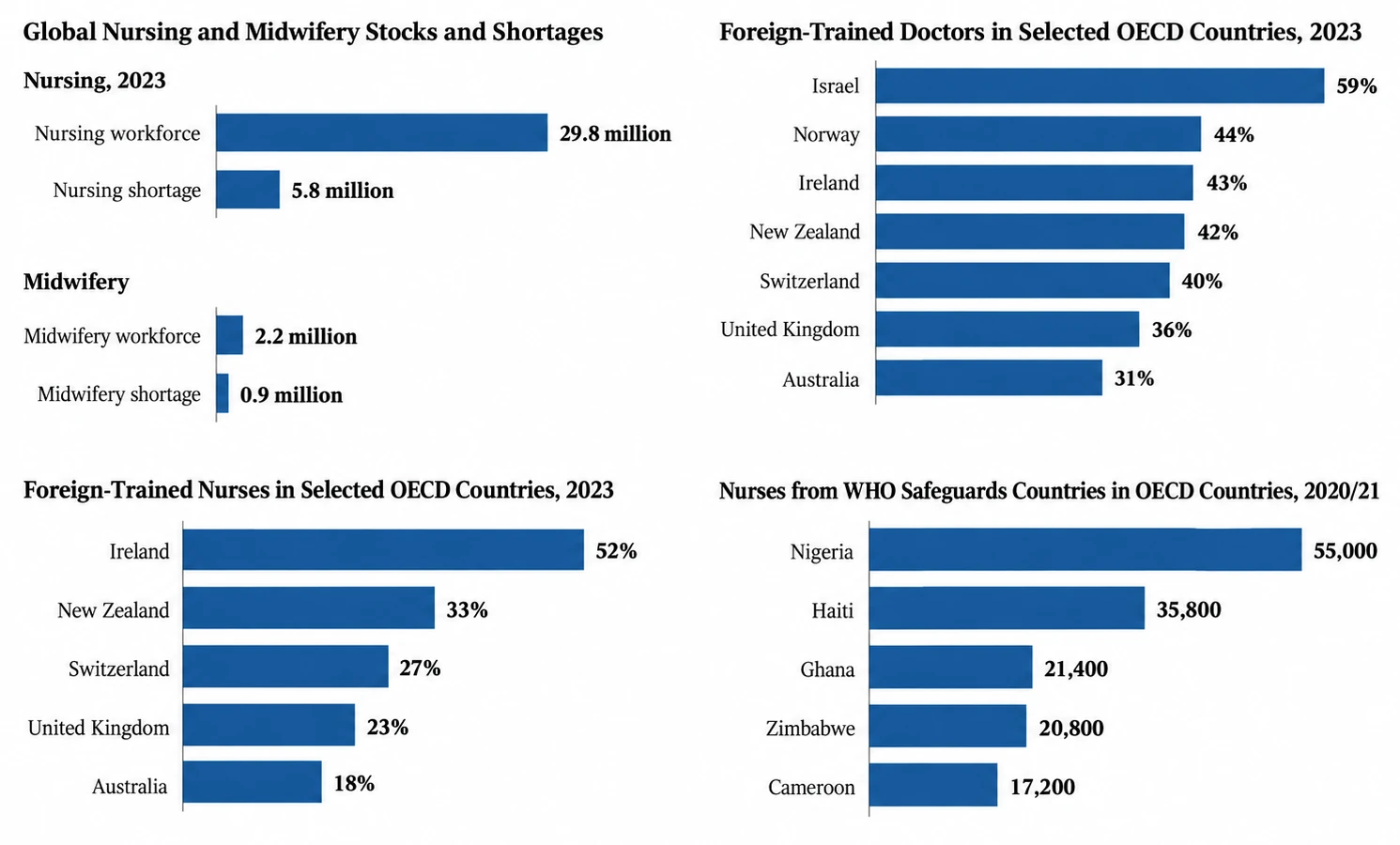
Sources: World Health Organization; Organisation for Economic Co-operation and Development.
Countries of origin are concentrated differently by profession. In 2020/21, slightly fewer than 100,000 India-born doctors were practising in OECD countries. Germany, China and Pakistan each accounted for about 30,000 emigrant doctors. The Philippines was the largest country of origin for migrant nurses, with nearly 280,000 practising in OECD countries, followed by India with 122,000 and Poland with approximately half the Indian total. About 89,000 doctors and 257,000 nurses employed in OECD countries had been born in countries covered by the WHO Health Workforce Support and Safeguards List. Pakistan accounted for about 29,600 of the doctors and Nigeria for 17,000. Among nurses from countries under WHO safeguards, Nigeria accounted for about 55,000, Haiti 35,800, Ghana 21,400, Zimbabwe 20,800 and Cameroon 17,200.
In 2026, WHO set out two criteria for identifying countries under the Health Workforce Support and Safeguards List. Medical doctors, nursing personnel and midwifery personnel must have a combined density below 49 per 10,000 population, and the universal health coverage service coverage index must be below 50. WHO states that 49 per 10,000 is not a recommended staffing level. The Global Code of Practice on the International Recruitment of Health Personnel and the safeguards recommendations are voluntary instruments rather than legally binding rules. WHO discourages active international recruitment from countries covered by the safeguards. Individual health workers may apply directly for employment abroad, and government-to-government recruitment may proceed where the source country's health authorities are consulted and support is provided according to national health system priorities. From 2026, Member States meeting the criteria may request exemption from the safeguards, while countries outside the provisional group may request their application.
England applies a separate red and amber classification through its Code of Practice for the International Recruitment of Health and Social Care Personnel. The published code, last updated in March 2025, derives its red category from the WHO Health Workforce Support and Safeguards List 2023. Bangladesh, Ghana, Malawi, Nigeria, Pakistan, Uganda, Zambia and Zimbabwe are among the countries from which active recruitment is not permitted under the code. Kenya and Nepal are classified as amber because government-to-government agreements permit managed recruitment under specified terms. Individuals resident in red or amber countries may still make direct applications to advertised vacancies without recruitment by an agency or other intermediary.
Government-to-government recruitment has become an established component of international health personnel migration. Guidance issued in 2024 by WHO and the Organisation for Economic Co-operation and Development (OECD), with the International Labour Organization (ILO), addresses recruitment terms, employment conditions, worker rights, source-country health system priorities and monitoring. The United Kingdom and Kenya concluded a healthcare workforce agreement in 2021 covering nurses and other healthcare professionals, recruitment regulation, employment conditions and a joint implementation committee. Kenya subsequently entered England's amber category, limiting active recruitment to the terms agreed by the two governments. The United Kingdom and Nepal signed a memorandum in August 2022. The memorandum also provides for United Kingdom support to increase the number of healthcare professionals available within Nepal.
Germany operates another state-supported recruitment model through the Triple Win programme administered by the German Federal Employment Agency and Deutsche Gesellschaft für Internationale Zusammenarbeit. Since 2013, the programme has placed more than 8,000 nursing professionals and trainees with approximately 400 German health and care employers, with more than 6,000 having arrived in Germany by October 2025. Japan admits nurse and care worker candidates from Indonesia, the Philippines and Viet Nam under Economic Partnership Agreements. By the end of July 2026, cumulative admissions under these programmes had exceeded 10,000 candidates. Australia introduced expedited registration from October 2024 for selected specialist doctors trained in the United Kingdom, Ireland and New Zealand and introduced additional registration routes for eligible overseas nurses from 2025.
Health for all remains an undertaking of implementation. International norms, financing mechanisms and advances in medicine have expanded the means available to protect health, but their value depends on whether essential services, medicines and technologies reach populations without financial hardship or exclusion. The continuing distance between agreed commitments and access is a measure of how far the world has advanced towards the right to the highest attainable standard of health.
Disclaimer
The scope of this analysis may differ according to its intended use. Unless otherwise agreed in relation to a specific mandate, it was not prepared by reference to the circumstances or requirements of any particular audience. Nothing in it constitutes investment advice or a determination of its suitability or appropriateness for a particular recipient. The material reflects the evidence and conditions relevant to the period examined and may be affected by subsequent developments. Users are responsible for determining the relevance of its content to their circumstances and for obtaining appropriate advice where a decision requires specialist judgement.
About the Chief Analyst

Nsikan Nyauko is an economist and Chartered Management Consultant with decades of cross-industry experience and a range of postgraduate qualifications spanning Economics, Big Data and Analytics, International Affairs and Diplomacy, International Commercial Law, Digital Transformation, Project Management, Business and Management, and Public Health. He serves the Centre as Faculty, Executive Development and Lead Advisor, Group Regional Programme for EMEA, APAC and the Americas. He has built relationships across industry, government, international organisations, academia, think tanks and civil society and has developed policy and strategy papers to support decision-making by corporations and sovereign entities.
Associate Analysts Nadine Karam; Marek Zieliński; Yun-seo Han; Camila Arriagada; Elias Nordström; Graham Bellamy